

Quick Navigation:
- Understanding Patina
- Patina and Japanese Carbon Steel Knives
- Natural and Forced Patina
- Why Carbon Steel Knives Form Patina
- Stainless Clad Carbon Steel Knives
- Iron Clad and Monosteel Carbon Steel Knives
- Reactivity of Carbon Steel and Patina Formation
- Rust or Patina? How to Tell the Difference
- Caring for Your Patina
- Patina Reset

If you own a carbon steel Japanese knife, you've probably noticed discoloration on the blade. Maybe it's turning blue where you cut onions, or developing dark spots. You might be wondering: is this rust?
Don't panic - this is patina, and it's completely normal. In fact, patina is what gives carbon steel knives their character. Each knife develops its own unique patterns based on what you cut, making it truly yours. It's one reason why enthusiasts prefer carbon steel over stainless - the knife gains personality with use instead of staying pristine and unchanging.
Understanding Patina
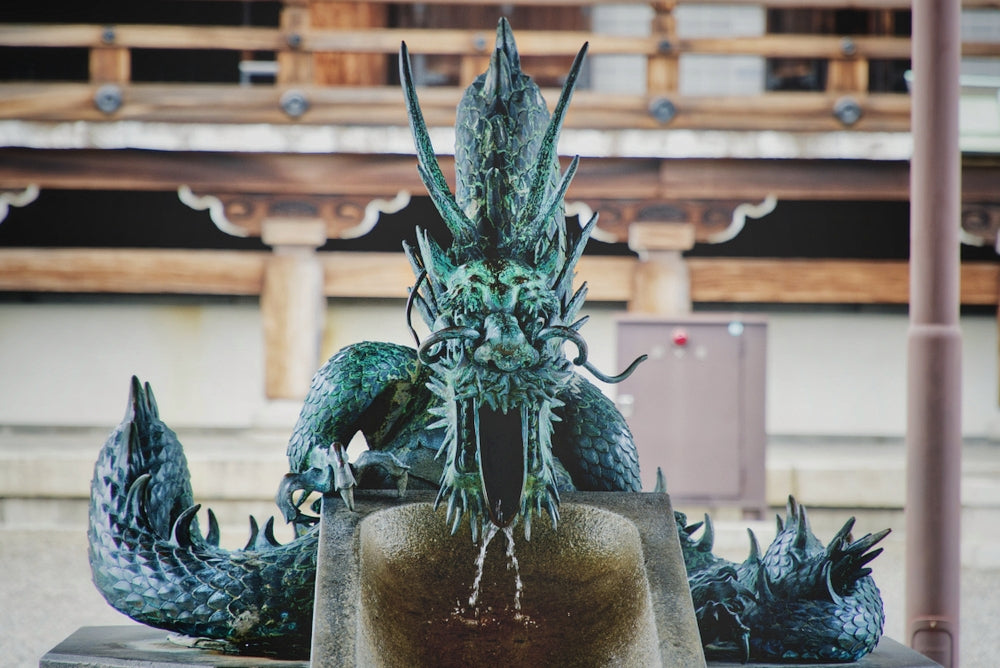
Patina is a natural, protective layer that forms on the surface of certain metals over time.
Patina forms when metal reacts with moisture, acids, and oxygen in the environment. This chemical reaction creates a thin layer of compounds on the surface that changes the metal's appearance.
The word "patina" originally referred to the aged appearance on metals like copper and bronze. Patina is highly valued on antique objects, artwork, and architectural elements for its aesthetic appeal and historical significance. An example is the dragon statue in a Japanese temple shown above, which developed a green patina called verdigris over time.
Patina and Japanese Carbon Steel Knives
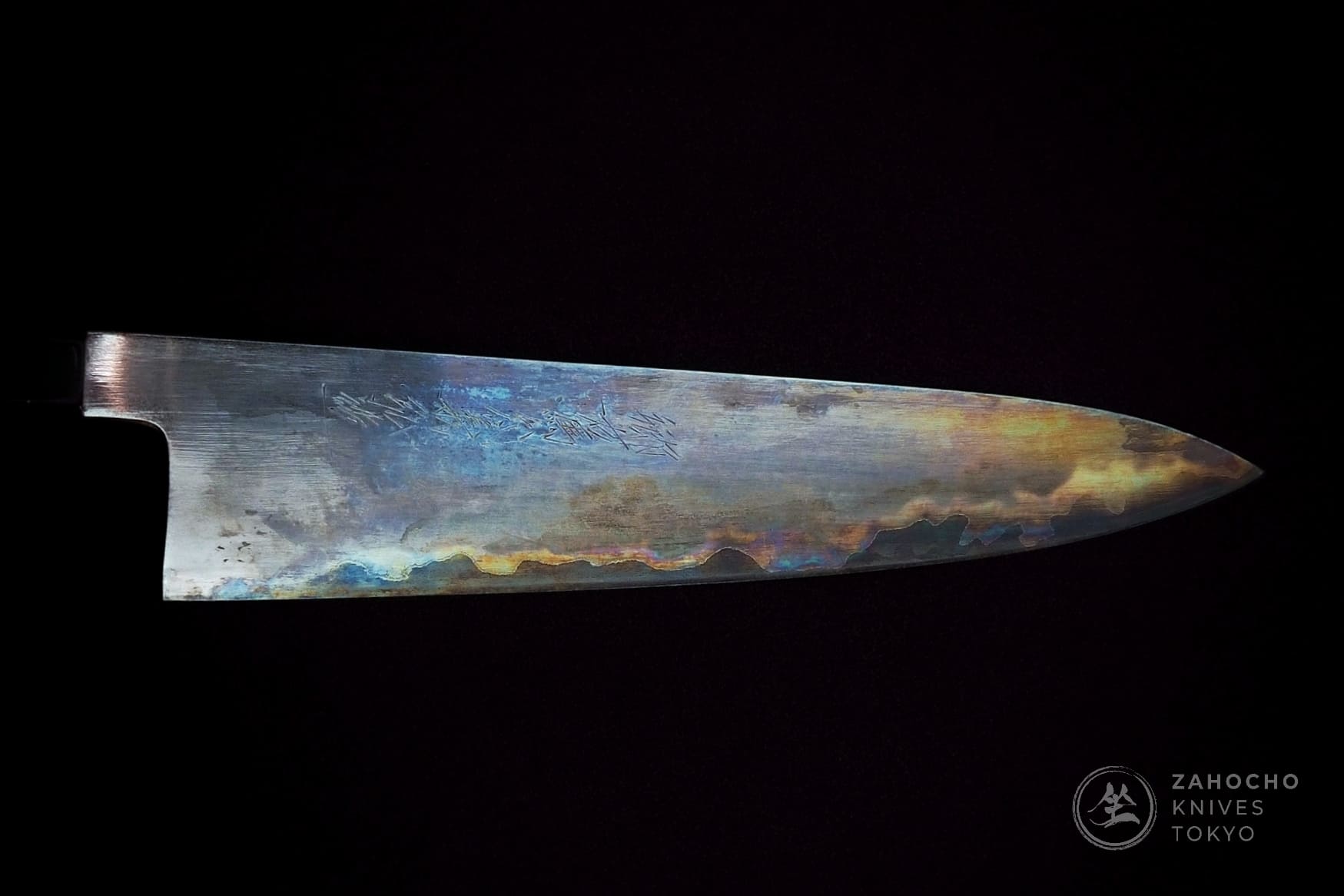
Patina on carbon steel knives serves two purposes: it protects the blade and gives it character.
The protective function is straightforward - patina acts as a barrier against rust. Once stable, this layer of iron oxide compounds helps your knife resist corrosion during daily use. This means less maintenance worry and better rust protection.
The aesthetic aspect is what makes carbon steel knives special. As you use your knife, it develops colors based on what you cut. Early patina shows blues and oranges, but over time it matures to a stable charcoal grey.
Natural and Forced Patina

Patina forms naturally through normal use. Every time you cut something, the carbon steel reacts with moisture and acids in the food. Acidic ingredients like onions and proteins in meat speed up this process, creating unique patterns on the blade.
If you want to skip the wait, you can force a patina. This involves applying reactive substances like coffee or mustard directly to the blade. Soak the knife in a cup of hot, strong coffee for a few minutes, or apply a thin layer of mustard and let it sit. These substances speed up the oxidation that would normally take weeks or months of regular use.
After the treatment, rinse and dry the knife. You'll see a dark grey to black patina, depending on what you used and how long you left it on.
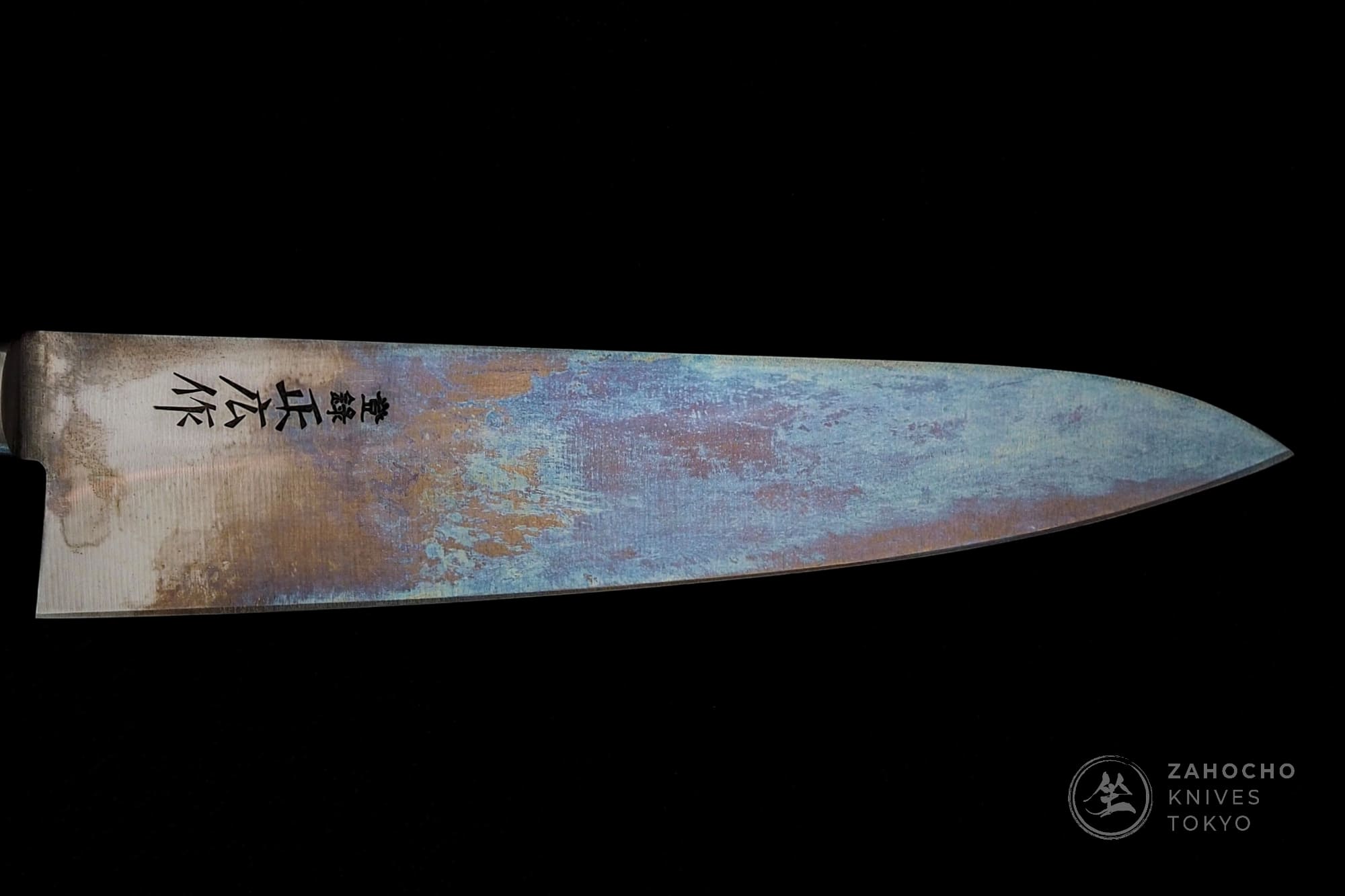
The Watanabe Pro gyuto shown above was soaked in hot, strong coffee. Don't worry about the heat - it won't damage the steel's temper. The temperature isn't high enough to affect the blade's hardness or performance.
Why Carbon Steel Knives Form Patina
Why do some knives develop patina while others don't? It comes down to one element: chromium.
Steel is made of iron and carbon, plus small amounts of other elements like manganese, chromium, and vanadium. These alloying elements improve strength, toughness, and corrosion resistance.
Stainless steel contains at least 13% chromium, which prevents patina formation. This high chromium content resists oxidation and corrosion.
Carbon steel knives have little to no chromium, making them prone to oxidation and patina development. The most common Japanese carbon steels are Hitachi's white (shirogami) and blue (aogami) steels, which contain virtually no chromium.
Semi-stainless steels like SKD and HAP40 fall in between - they contain 4-5% chromium, which is enough to slow patina formation but not prevent it entirely. These steels behave more like carbon steels than true stainless.
Stainless Clad Carbon Steel Knives: Best of Both Worlds
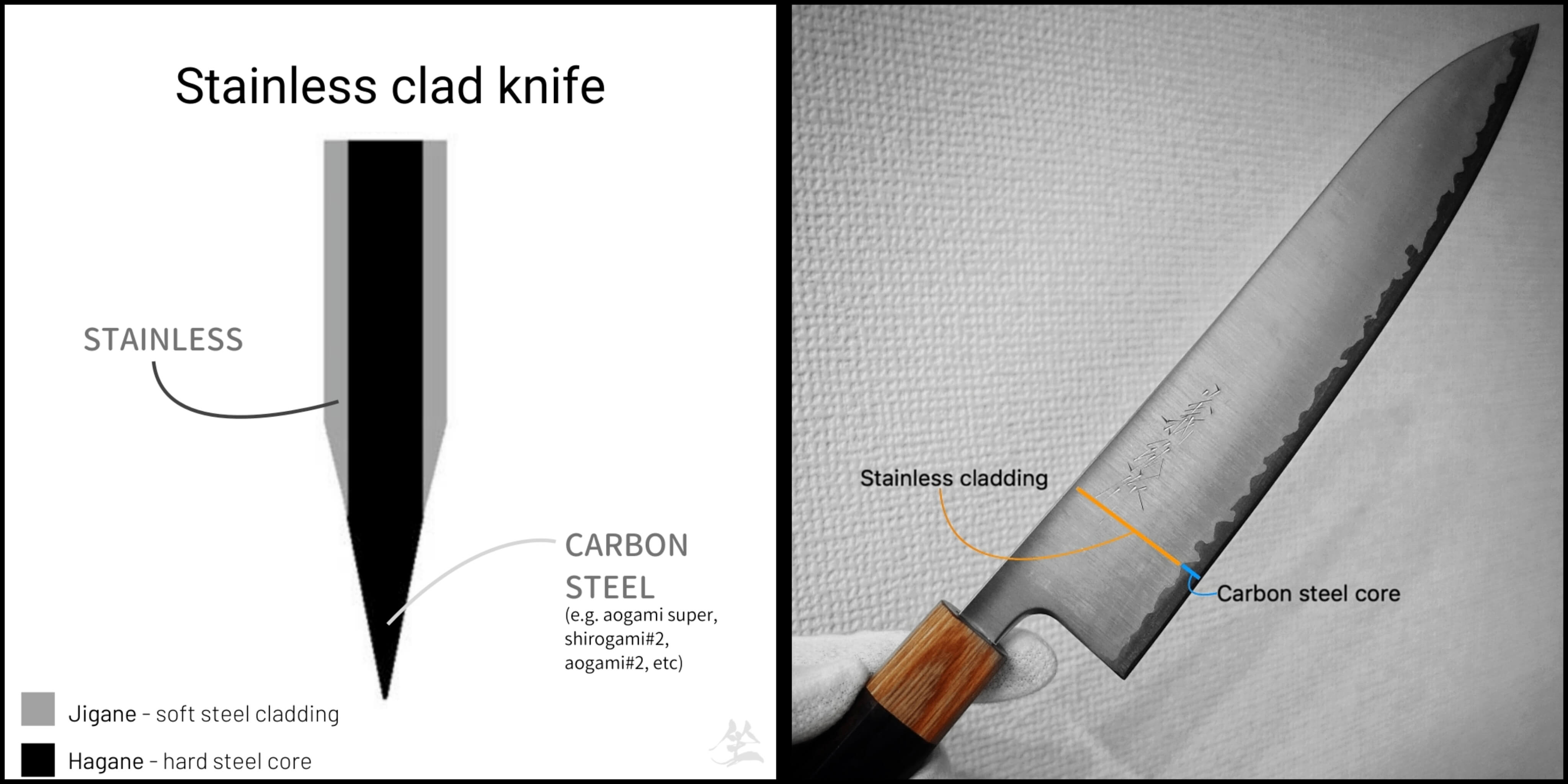
Carbon steel requires more maintenance than stainless. Japanese knife makers solved this with stainless clad carbon steel knives - a construction where the core steel is sandwiched between two layers of stainless steel.
The stainless outer layer protects most of the carbon steel from moisture and air, which reduces rust risk. The stainless cladding provides corrosion resistance like a full stainless knife would. This means you get the sharpness of carbon steel without the high maintenance of monosteel carbon or iron clad knives.
Iron Clad and Monosteel Carbon Steel Knives
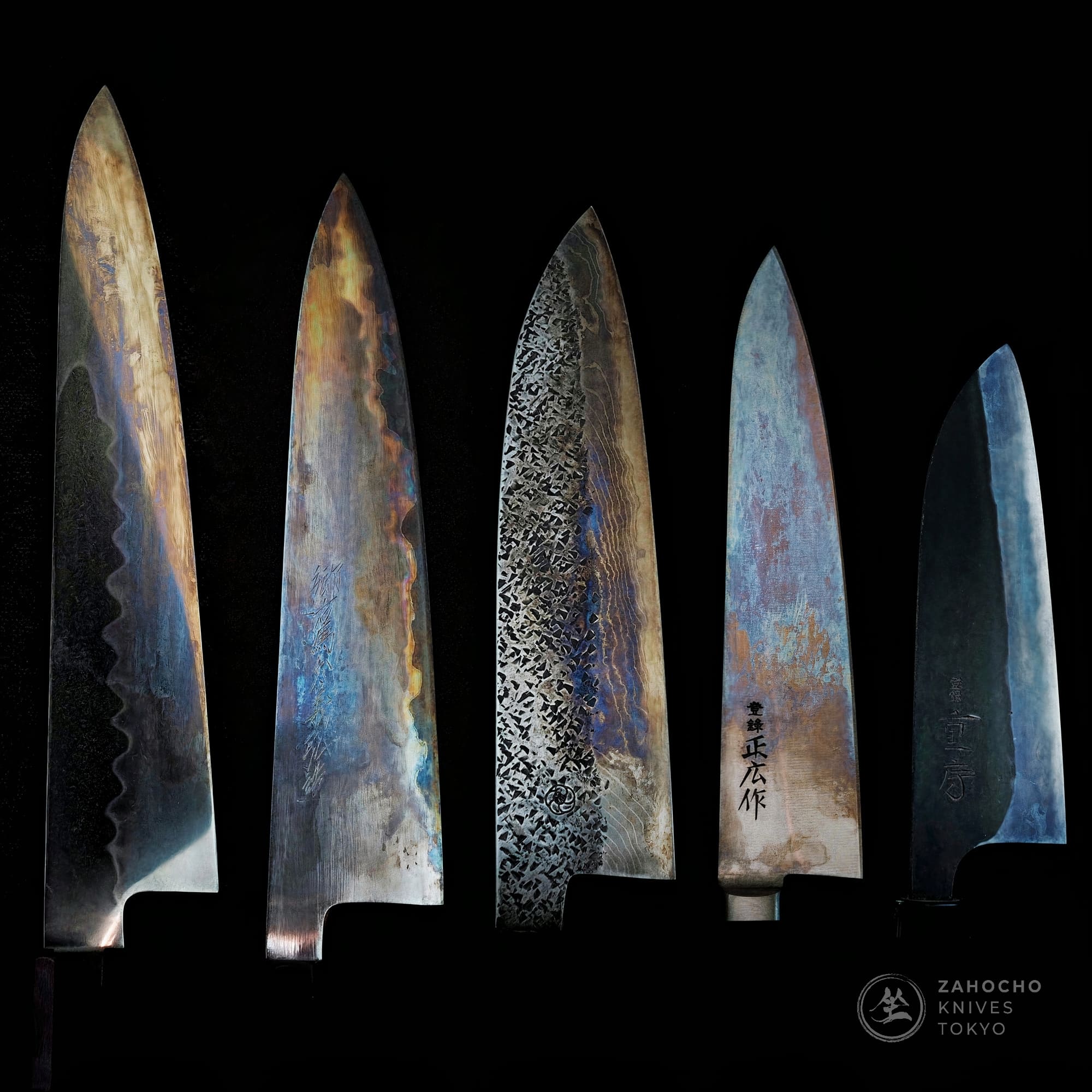
Stainless clad knives limit patina to the edge. If you want patina across the entire blade, you need iron clad or monosteel carbon knives.
Iron clad knives have a hard steel core sandwiched between soft iron cladding. Unlike stainless cladding, iron cladding develops patina. This means the entire blade - core and cladding - will change color and develop patterns over time.
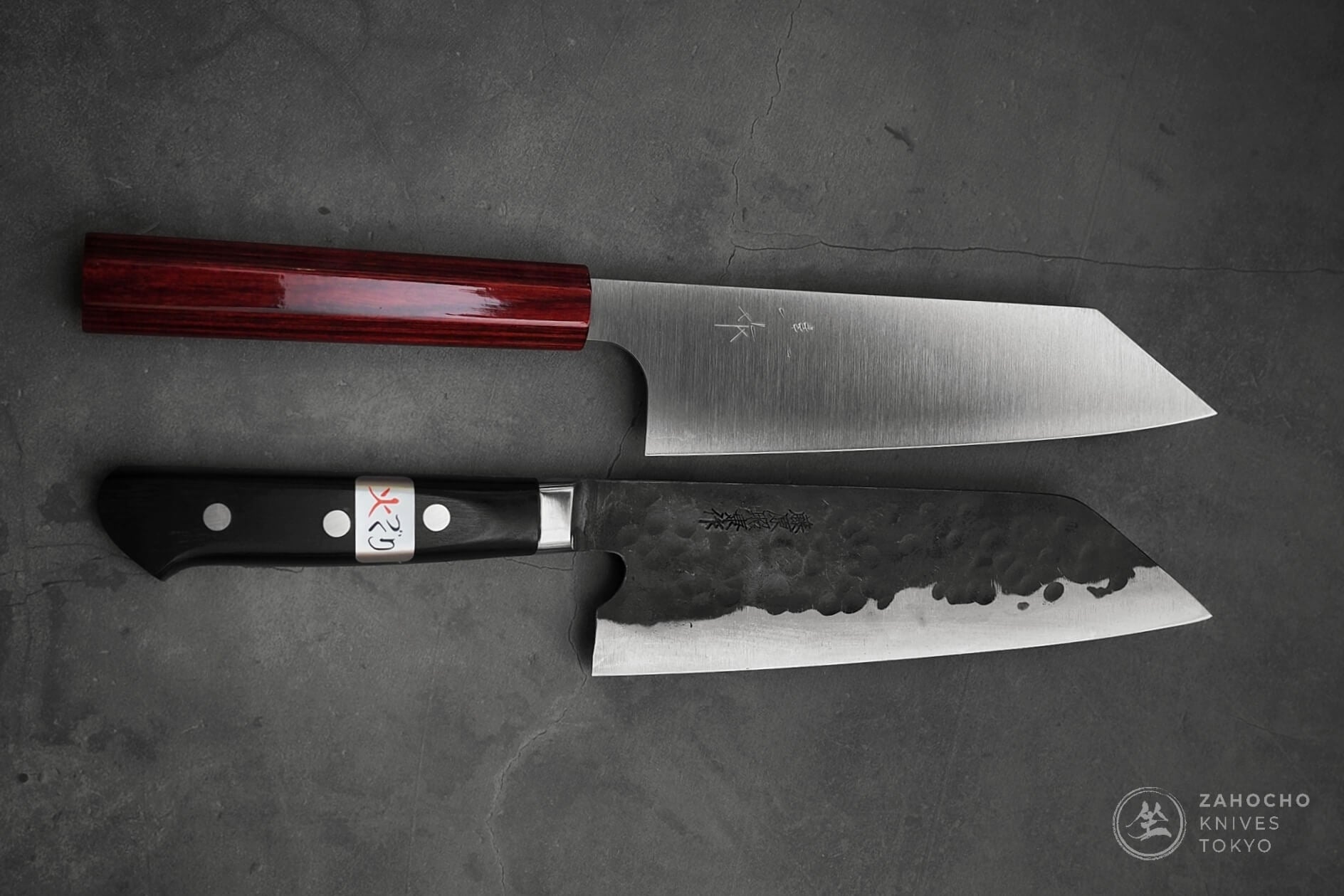
Monosteel carbon knives are made from a single piece of carbon steel with no cladding at all. The entire blade develops patina. The Masahiro VC carbon gyuto shown above is a monosteel knife.
Reactivity of Carbon Steel and Patina Formation
The first time you use a brand new carbon steel knife, you might notice onions turning slightly darker where you cut them, or a faint metallic taste on fruits. This is completely normal because the blade hasn't developed a patina yet. This initial reactivity is more noticeable with steels like SK, which have more impurities. Higher-quality refined steels like shirogami and aogami produce less discoloration or metallic taste.
The good news: this is temporary. As you use your knife, patina starts to form and the discoloration and metallic taste disappear quickly - typically after just 2-3 uses as the initial patina develops. With continued regular use over 2-4 weeks, this patina matures into a stable protective layer, especially if you're cutting acidic ingredients like onions and tomatoes.
If you want to skip the initial reactive period, force a patina with coffee or mustard before first use. This creates the protective layer immediately.
Rust or Patina? How to Tell the Difference
One of the most common questions from new carbon steel knife owners: "Is this rust or patina?" The answer matters because rust needs to be removed, while patina is your friend.
The test is simple. Take a tissue or paper towel and gently wipe the discolored area. If color transfers to the paper, it's rust and should be removed. If there's no transfer, it's patina - a protective layer that's actually helping your knife.
This simple test saves carbon steel knife owners from unnecessary worry and helps you understand what's normal aging versus what needs attention.
Caring for Your Patina
Caring for a carbon steel knife with patina follows the same routine as any carbon steel knife: wash by hand with mild soap, dry immediately after use, and store in a dry place. Never use a dishwasher. For more maintenance tips, see our Japanese knife care guide.
Patina Reset
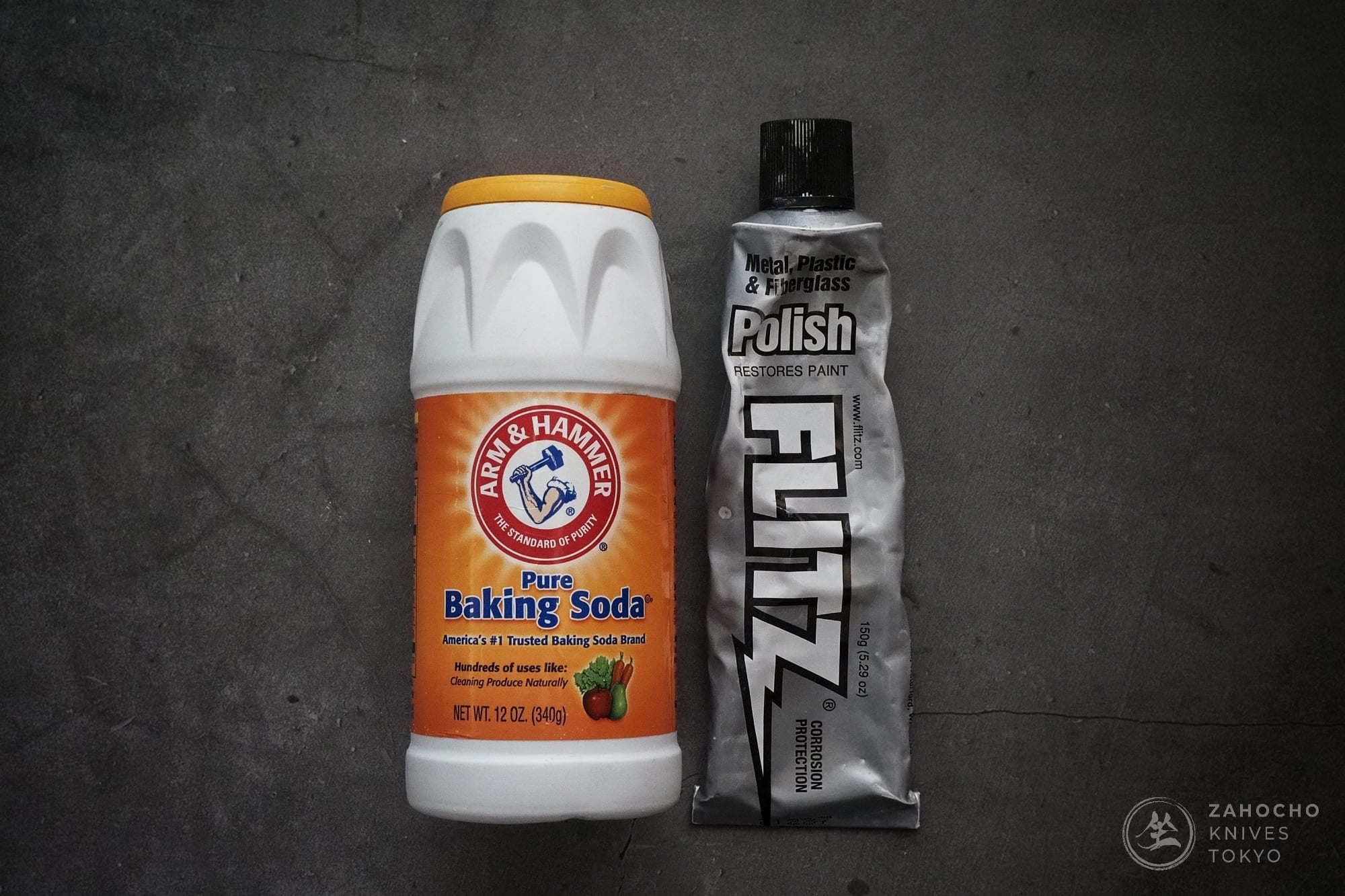
Sometimes you might want to remove your knife's patina - maybe you want to start fresh, or you don't like how it looks. The process is straightforward.
For light patina, use baking soda paste. Mix baking soda with a small amount of water to create a thick paste. Apply it to the blade, rub gently, then rinse off.
For stubborn patina, use Flitz metal polish. This non-toxic, non-abrasive product removes patina effectively and can also remove any rust that may have formed.
Frequently Asked Questions
Is patina the same as rust?
No. Patina is a protective layer of iron oxide that prevents rust. Rust is destructive corrosion that damages the blade. Test: wipe with tissue - if color transfers, it's rust. If not, it's patina.
Can I remove patina from my knife?
Yes. Use baking soda paste for light patina, or Flitz metal polish for stubborn patina. However, removing patina means you'll need to build it up again for protection.
Does patina affect food taste?
When you first use a new carbon steel knife (before any patina has formed), it can cause minor food discoloration or a slight metallic taste when cutting acidic ingredients. This is more noticeable with steels like SK, which have more impurities. High-quality refined steels like shirogami and aogami have minimal effects. Once a stable patina develops (typically 2-4 weeks), this issue disappears entirely.
How long does it take for patina to form?
Patina starts forming immediately when you cut acidic ingredients like onions - you'll see color changes on contact areas right away. A full, stable patina across the entire blade develops over 2-4 weeks with regular use. The more you use your knife, the faster and more stable the patina becomes.
Final Thoughts
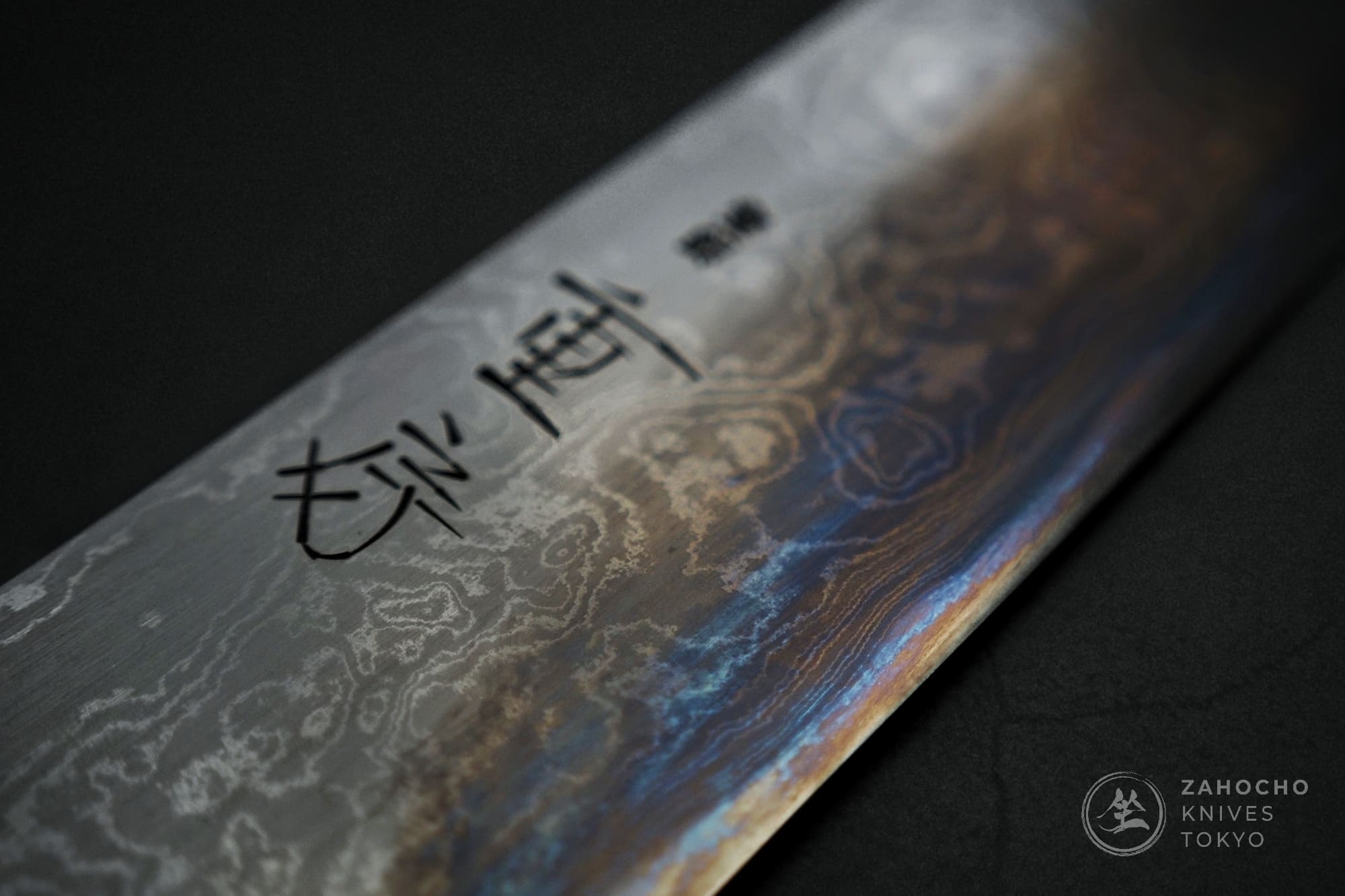
Patina on carbon steel knives protects against rust while giving each blade its own character. Whether you let it form naturally or force it with coffee or mustard, patina makes carbon steel easier to maintain and more interesting to use.
New carbon steel owners sometimes worry about the color changes, but once you understand what's happening, patina becomes one of the best parts of owning these knives. Care is straightforward: wash and dry after each use and never leave it wet or uncleaned, just like any other knife. With regular use, your knife will develop a stable protective patina over time.
Ready to explore carbon steel knives? Browse our carbon steel collection or learn more in our Japanese knife guides.
About the author: Fred M. trained at Tokyo Sushi Academy and worked as a sushi chef before starting Zahocho Knives in 2019. Based in Japan, he sources knives from renowned knife-making regions like Sakai and Sanjo, working with blacksmiths like Yoshikazu Tanaka, Satoshi Nakagawa, and Kisuke Manaka.