class="image-magnify-hover"
loading="eager" fetchpriority="high"
width="1638"
height="1638"
alt="Top down view of Yu Kurosaki Senko SG2 gyuto knife"
class="image-magnify-hover"
loading="eager" fetchpriority="high"
width="1638"
height="1638"
alt="Top down view of Yu Kurosaki Senko SG2 gyuto knife"
class="image-magnify-hover"
loading="lazy"
width="1638"
height="1638"
alt="Close up view of the blade of Yu Kurosaki Senko SG2 gyuto knife"
class="image-magnify-hover"
loading="lazy"
width="1638"
height="1638"
alt="Close up view of the blade of Yu Kurosaki Senko SG2 gyuto knife"
class="image-magnify-hover"
loading="lazy"
width="1637"
height="1638"
alt="Close up of the kanji of Yu Kurosaki Senko SG2 gyuto knife"
class="image-magnify-hover"
loading="lazy"
width="1637"
height="1638"
alt="Close up of the kanji of Yu Kurosaki Senko SG2 gyuto knife"
class="image-magnify-hover"
loading="lazy"
width="1638"
height="1638"
alt="Close up of the tip area of Yu Kurosaki Senko SG2 gyuto knife"
class="image-magnify-hover"
loading="lazy"
width="1638"
height="1638"
alt="Close up of the tip area of Yu Kurosaki Senko SG2 gyuto knife"
class="image-magnify-hover"
loading="lazy"
width="1638"
height="1638"
alt="Back side of Yu Kurosaki Senko SG2 gyuto knife"
class="image-magnify-hover"
loading="lazy"
width="1638"
height="1638"
alt="Back side of Yu Kurosaki Senko SG2 gyuto knife"
class="image-magnify-hover"
loading="lazy"
width="1638"
height="1638"
alt="Top down view of Yu Kurosaki Senko SG2 gyuto knife in vertical position"
class="image-magnify-hover"
loading="lazy"
width="1638"
height="1638"
alt="Top down view of Yu Kurosaki Senko SG2 gyuto knife in vertical position"
class="image-magnify-hover"
loading="lazy"
width="1638"
height="1638"
alt="Top down view of Yu Kurosaki Senko SG2 gyuto knife in diagonal position"
class="image-magnify-hover"
loading="lazy"
width="1638"
height="1638"
alt="Top down view of Yu Kurosaki Senko SG2 gyuto knife in diagonal position"
class="image-magnify-hover"
loading="lazy"
width="1638"
height="1638"
alt="Another top down view of Yu Kurosaki Senko SG2 gyuto knife in diagonal position"
class="image-magnify-hover"
loading="lazy"
width="1638"
height="1638"
alt="Another top down view of Yu Kurosaki Senko SG2 gyuto knife in diagonal position"
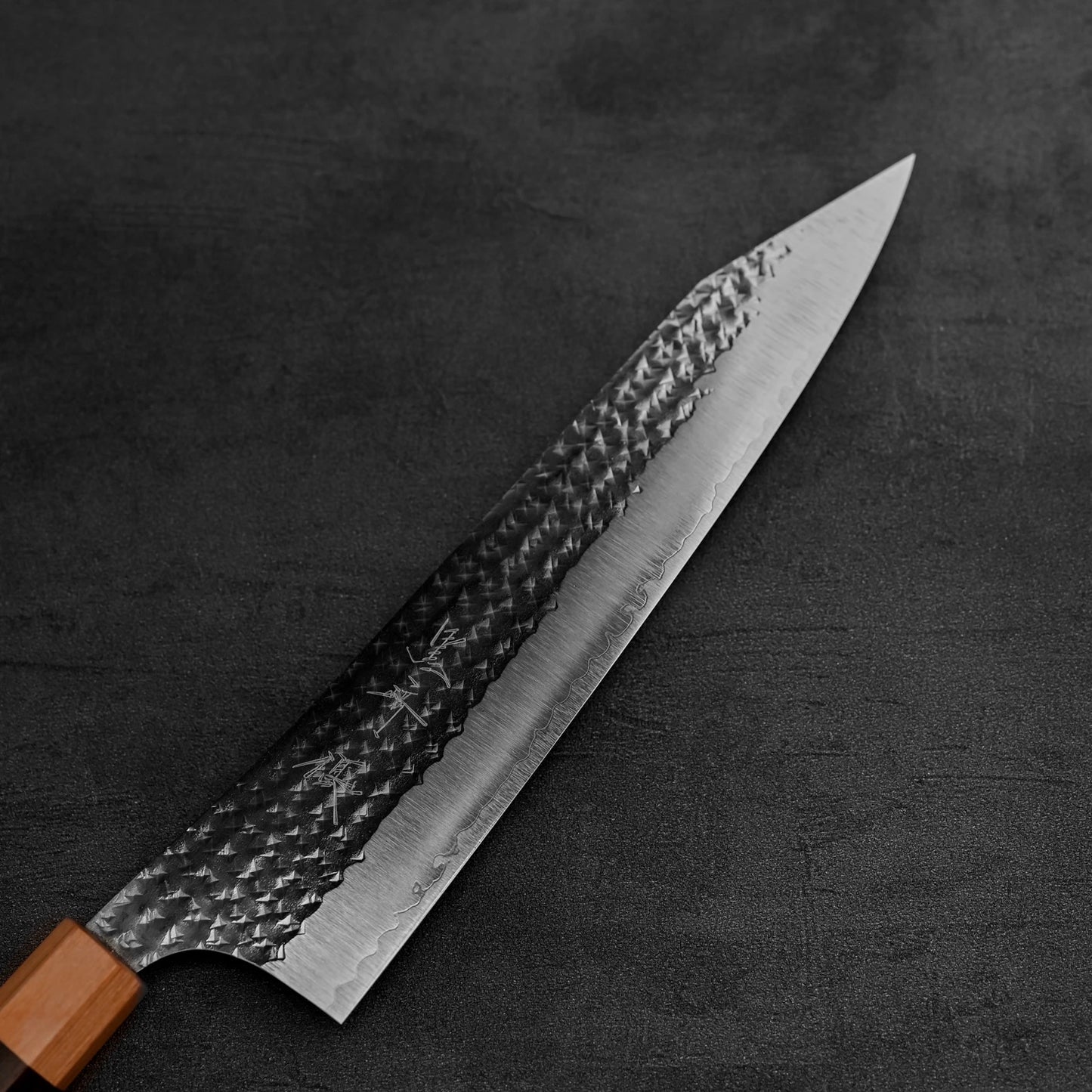
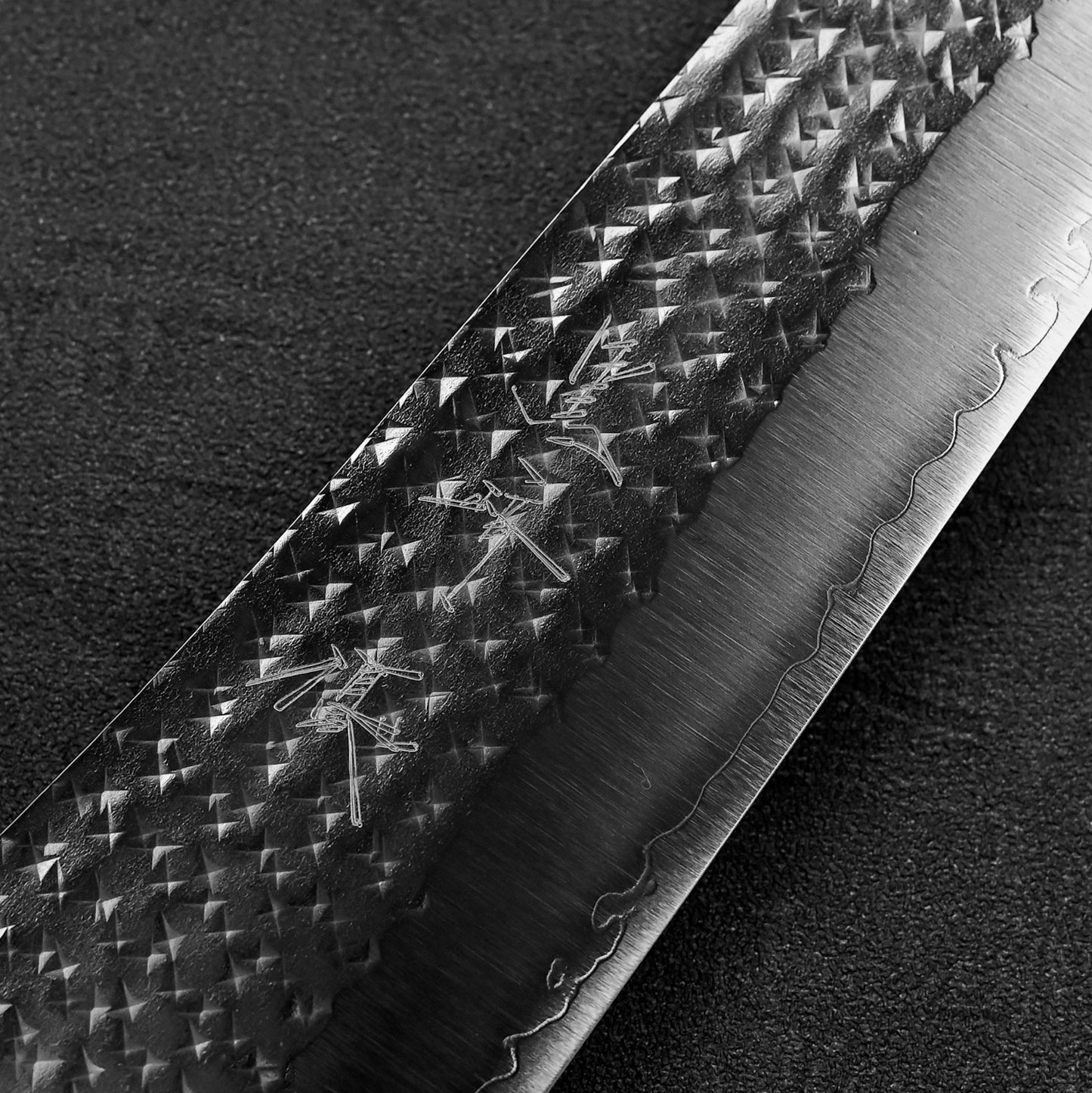
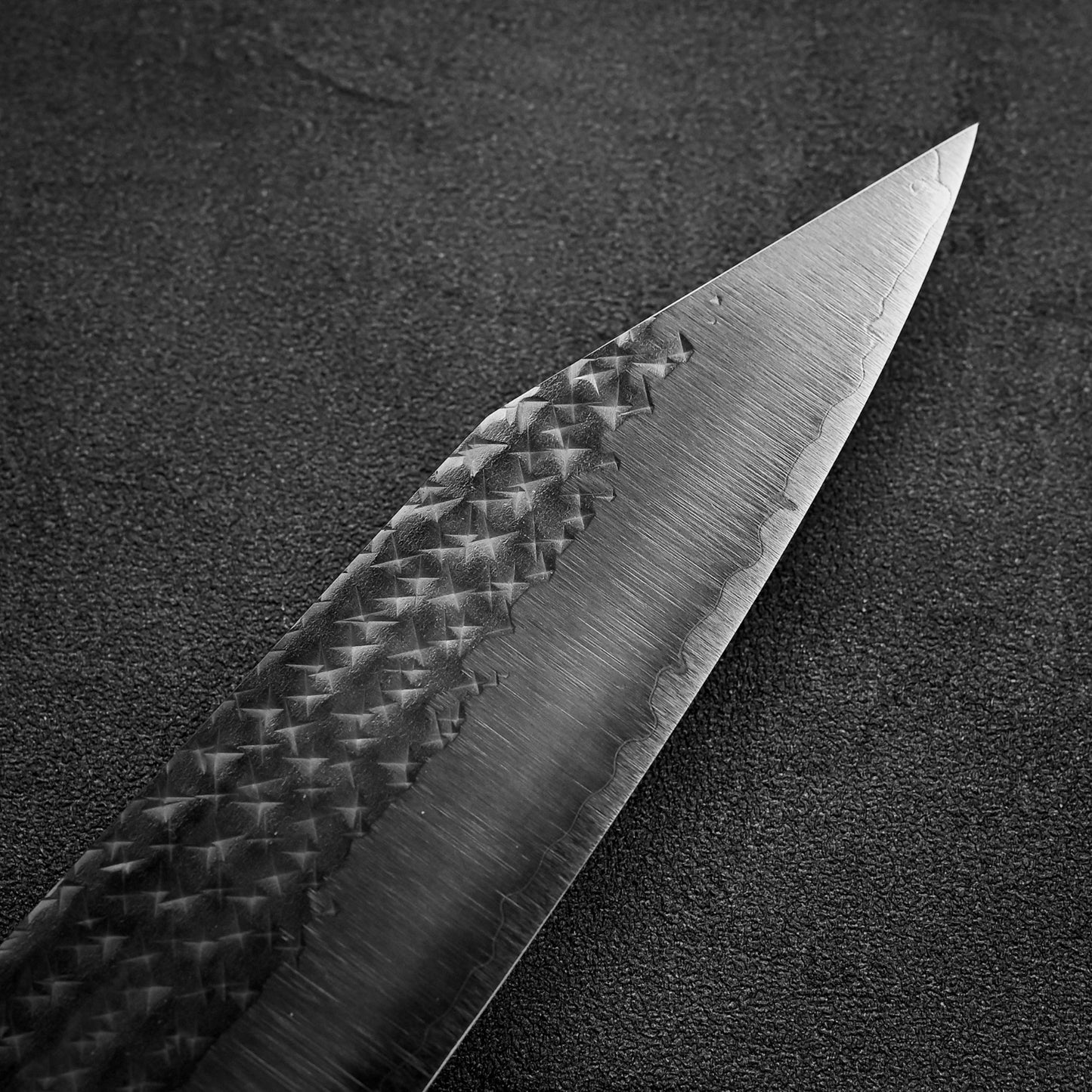
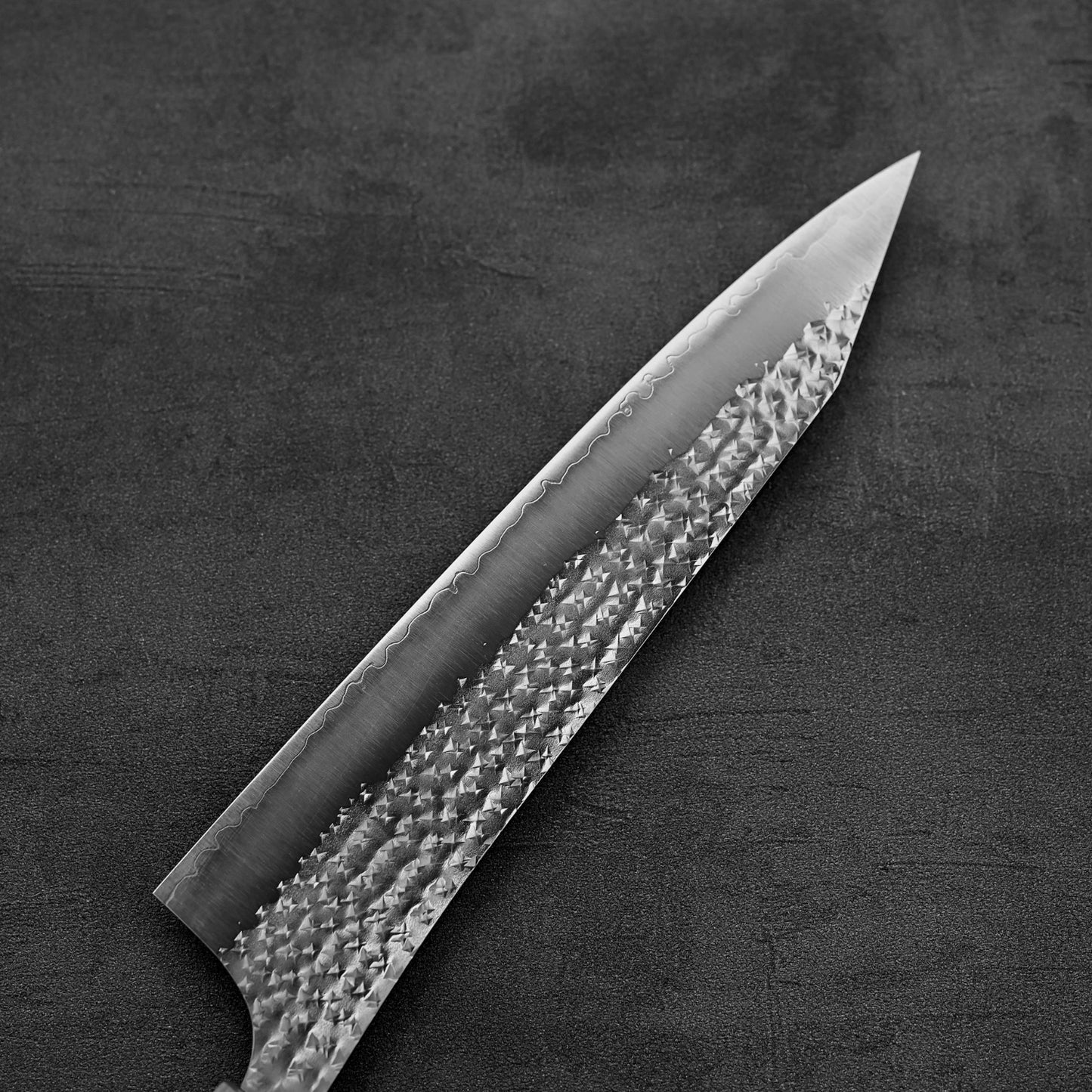
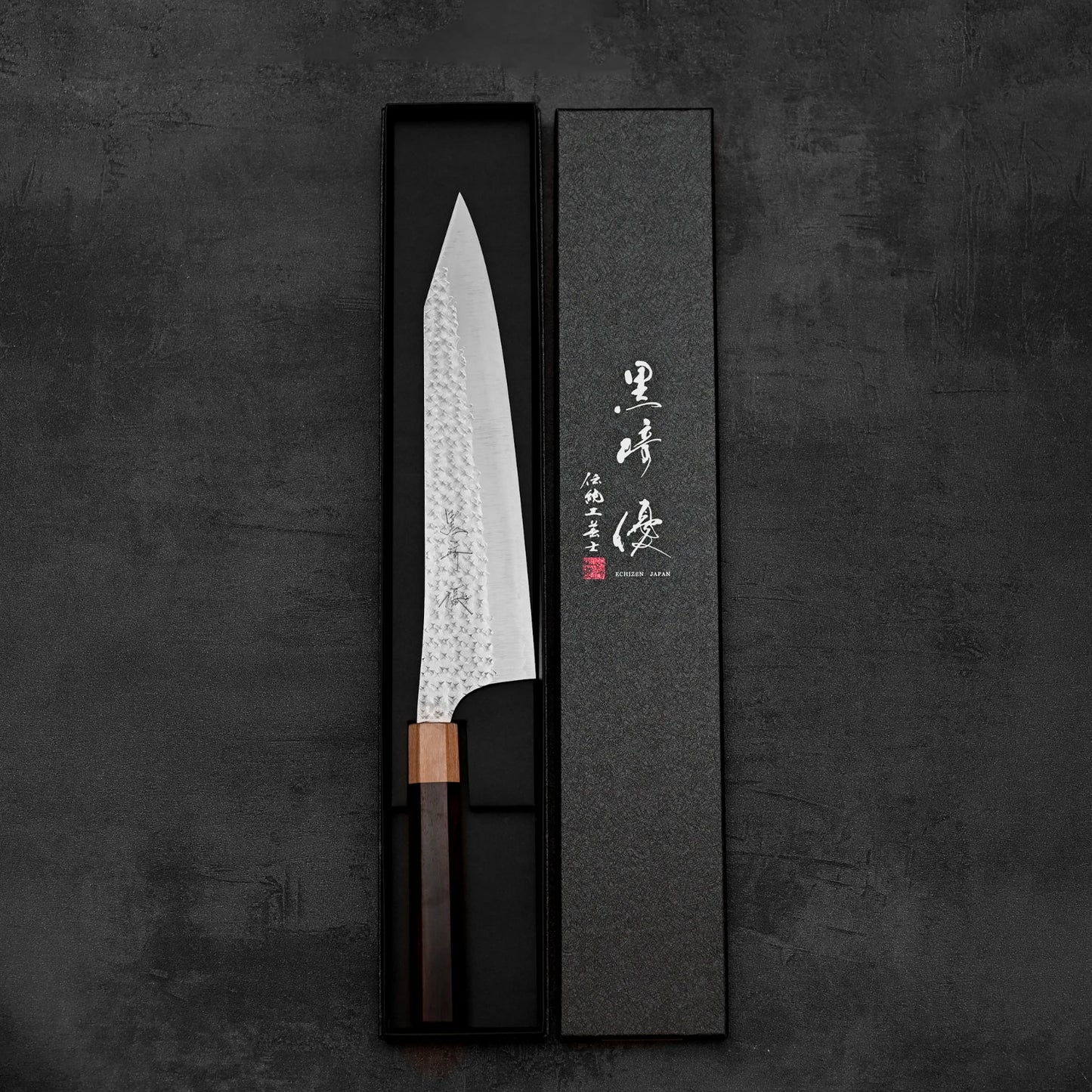
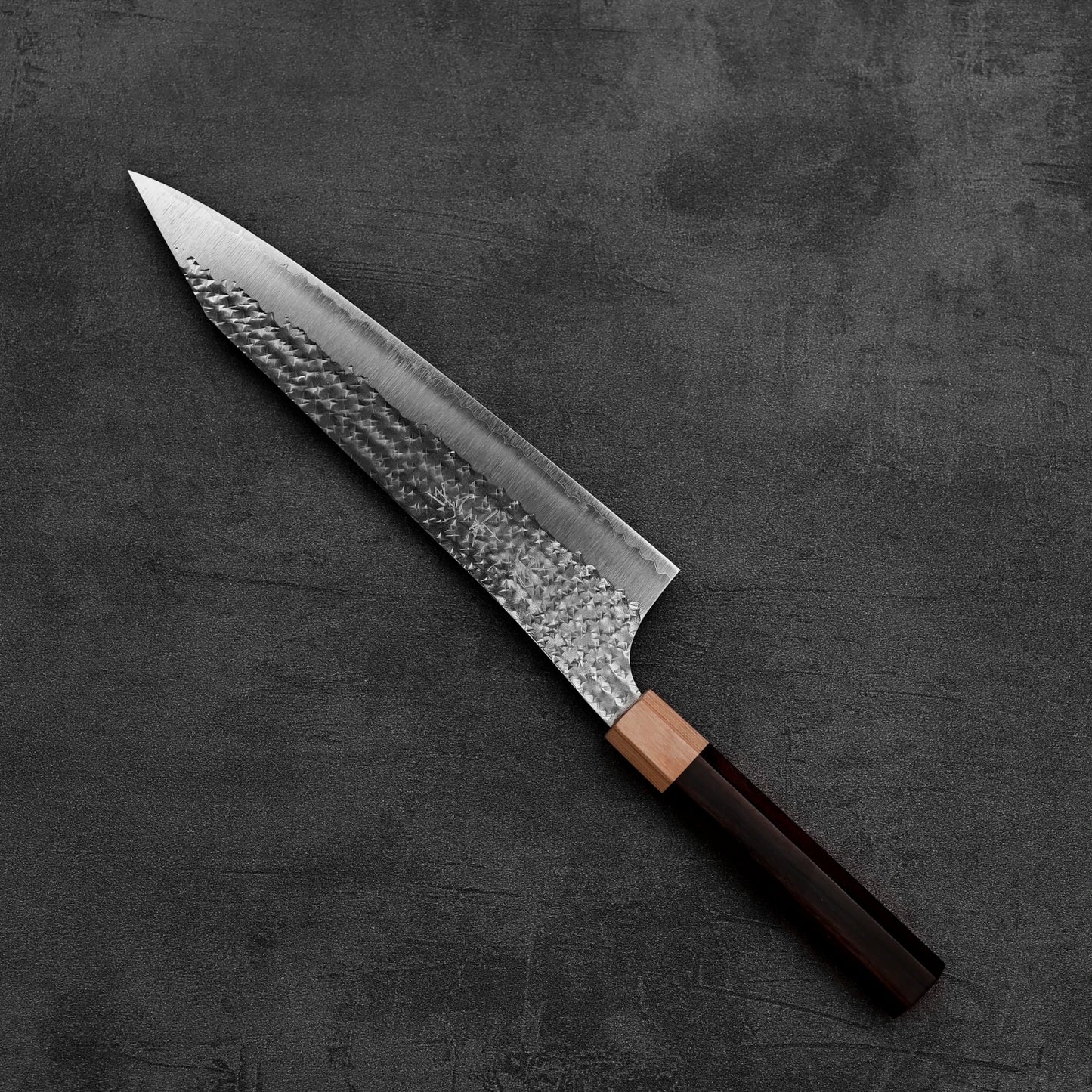
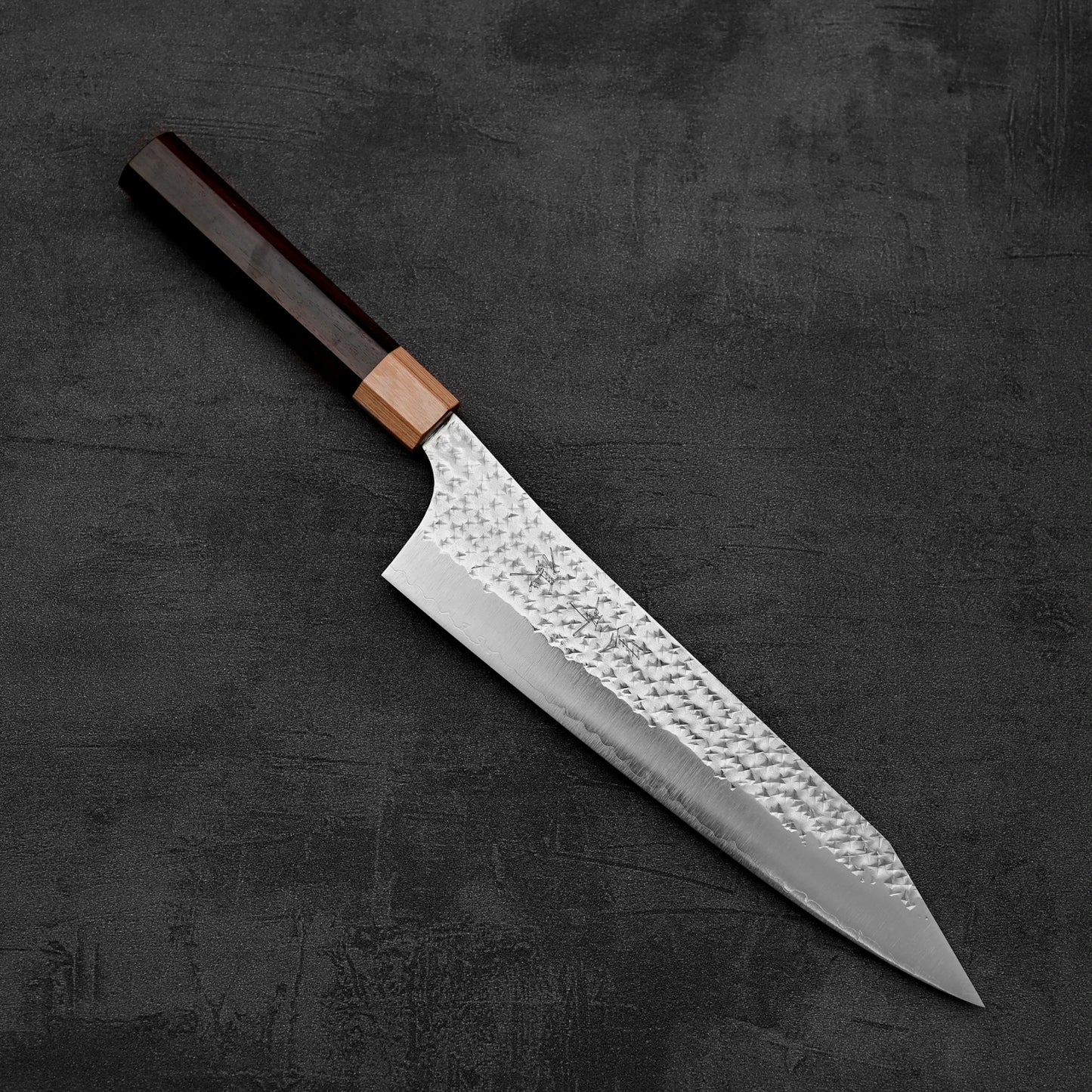
The Yu Kurosaki Senko SG2 Gyuto 246mm is a handcrafted Japanese chef’s knife made in Echizen, Japan. Featuring a core of SG2 powdered stainless steel, this gyuto delivers superior edge retention and durability. The tsuchime (hammered) finish, characteristic of the Senko series, enhances its visual appeal while improving food release. The octagonal rosewood handle provides a comfortable grip and precise control, making it well-balanced for extended use.
The gyuto is a multi-purpose Japanese chef knife, designed for slicing, dicing, and chopping vegetables, as well as working with boneless meats and fish.
Yu Kurosaki is a master blacksmith from Echizen who trained for 12 years at Kanehiro Hamono before establishing his own workshop in 2014. Known for blending modern metallurgy with traditional forging techniques, he achieved master blacksmith status at an unusually young age. His Senko series showcases his distinctive hammered blade finishes.