class="image-magnify-hover"
loading="eager" fetchpriority="high"
width="2000"
height="2000"
alt="A Yoshikane nashiji shirogami#2 gyuto 240mm knife with a wooden handle lies on a gray, textured concrete surface. Its shirogami#2 steel blade, by Yoshikane, has Japanese characters etched near the handle."
class="image-magnify-hover"
loading="lazy"
width="2000"
height="2000"
alt="The Yoshikane nashiji shirogami#2 gyuto 240mm features engraved symbols and rests on a cracked, textured gray surface."
class="image-magnify-hover"
loading="lazy"
width="2000"
height="2000"
alt="The Yoshikane nashiji shirogami#2 gyuto 240mm features engraved symbols and rests on a cracked, textured gray surface."
class="image-magnify-hover"
loading="lazy"
width="2000"
height="2000"
alt="A Yoshikane nashiji shirogami#2 gyuto 240mm knife with a sharp, patterned blade rests on cracked gray concrete, showcasing the Yoshikane brands expert steel craftsmanship."
class="image-magnify-hover"
loading="lazy"
width="2000"
height="2000"
alt="A Yoshikane nashiji shirogami#2 gyuto 240mm knife with a sharp, patterned blade rests on cracked gray concrete, showcasing the Yoshikane brands expert steel craftsmanship."
class="image-magnify-hover"
loading="lazy"
width="2000"
height="2000"
alt="Close-up view of the Yoshikane nashiji shirogami#2 gyuto 240mm by Yoshikane, featuring kanji on its shirogami#2 steel blade with a textured, polished finish against a dark cracked background."
class="image-magnify-hover"
loading="lazy"
width="2000"
height="2000"
alt="Close-up view of the Yoshikane nashiji shirogami#2 gyuto 240mm by Yoshikane, featuring kanji on its shirogami#2 steel blade with a textured, polished finish against a dark cracked background."
class="image-magnify-hover"
loading="lazy"
width="2000"
height="2000"
alt="Close-up of the Yoshikane nashiji shirogami#2 gyuto 240mm blade by Yoshikane on a cracked gray surface, highlighting the matte shirogami#2 steel grain and edge, with part of the handle visible in the lower left corner."
class="image-magnify-hover"
loading="lazy"
width="2000"
height="2000"
alt="Close-up of the Yoshikane nashiji shirogami#2 gyuto 240mm blade by Yoshikane on a cracked gray surface, highlighting the matte shirogami#2 steel grain and edge, with part of the handle visible in the lower left corner."
class="image-magnify-hover"
loading="lazy"
width="2000"
height="2000"
alt="The Yoshikane nashiji shirogami#2 gyuto 240mm, featuring a dark wooden handle and a sharp, shiny blade, is displayed diagonally on a textured gray stone surface."
class="image-magnify-hover"
loading="lazy"
width="2000"
height="2000"
alt="The Yoshikane nashiji shirogami#2 gyuto 240mm, featuring a dark wooden handle and a sharp, shiny blade, is displayed diagonally on a textured gray stone surface."
class="image-magnify-hover"
loading="lazy"
width="2000"
height="2000"
alt="The Yoshikane nashiji shirogami#2 gyuto 240mm by Yoshikane, featuring a sharp blade and wooden handle, rests beside its engraved wooden case on a gray textured surface."
class="image-magnify-hover"
loading="lazy"
width="2000"
height="2000"
alt="The Yoshikane nashiji shirogami#2 gyuto 240mm by Yoshikane, featuring a sharp blade and wooden handle, rests beside its engraved wooden case on a gray textured surface."
class="image-magnify-hover"
loading="lazy"
width="2000"
height="2000"
alt="A Yoshikane nashiji shirogami#2 gyuto 240mm chef’s knife by Yoshikane, featuring a wooden handle, rests vertically on a textured gray concrete surface with its stainless steel blade pointing upward."
class="image-magnify-hover"
loading="lazy"
width="2000"
height="2000"
alt="A Yoshikane nashiji shirogami#2 gyuto 240mm chef’s knife by Yoshikane, featuring a wooden handle, rests vertically on a textured gray concrete surface with its stainless steel blade pointing upward."
class="image-magnify-hover"
loading="lazy"
width="2000"
height="2000"
alt="The Yoshikane nashiji shirogami#2 gyuto 240mm, featuring a long, pointed stainless steel blade and a wooden handle, rests on a textured gray concrete surface."
class="image-magnify-hover"
loading="lazy"
width="2000"
height="2000"
alt="The Yoshikane nashiji shirogami#2 gyuto 240mm, featuring a long, pointed stainless steel blade and a wooden handle, rests on a textured gray concrete surface."
class="image-magnify-hover"
loading="lazy"
width="2000"
height="2000"
alt="A close-up of the Yoshikane nashiji shirogami#2 gyuto 240mm knife with a wooden handle, showcasing part of the blade on a textured gray concrete surface."
class="image-magnify-hover"
loading="lazy"
width="2000"
height="2000"
alt="A close-up of the Yoshikane nashiji shirogami#2 gyuto 240mm knife with a wooden handle, showcasing part of the blade on a textured gray concrete surface."
class="image-magnify-hover"
loading="lazy"
width="3888"
height="3888"
alt="Close-up of the Yoshikane nashiji shirogami#2 gyuto 240mm knife’s sharp tip, showcased vertically against a plain light gray background."
class="image-magnify-hover"
loading="lazy"
width="3888"
height="3888"
alt="Close-up of the Yoshikane nashiji shirogami#2 gyuto 240mm knife’s sharp tip, showcased vertically against a plain light gray background."
1 / of11
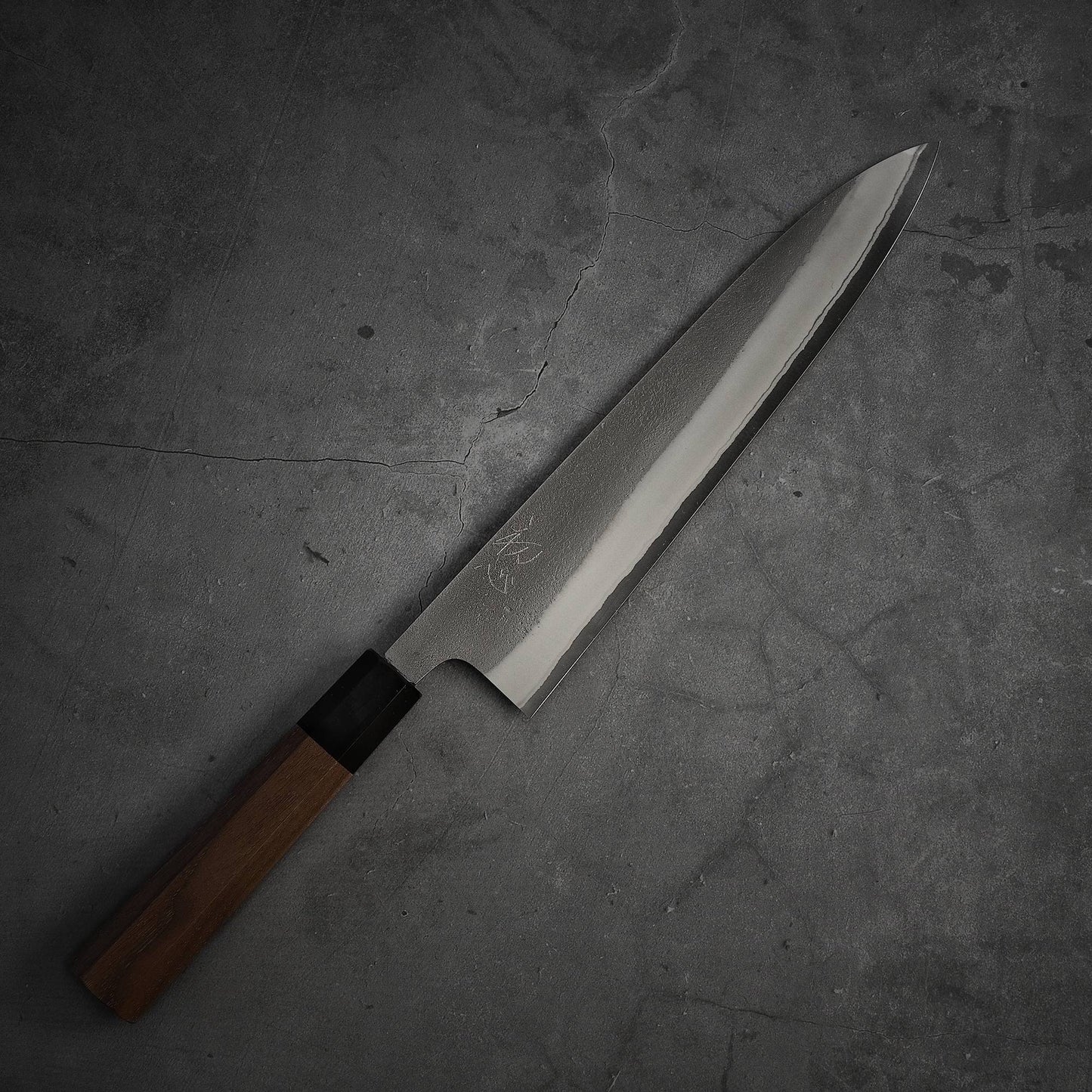
Hatsukokoro x Yoshikane nashiji shirogami#2 gyuto 240mm
Sale
Sold out
Ships from Tokyo, Japan · Dispatched within 24–48 hours
Worldwide shipping with tracking
20,000円以上のご注文で送料無料
Free shipping on orders over ¥20,000
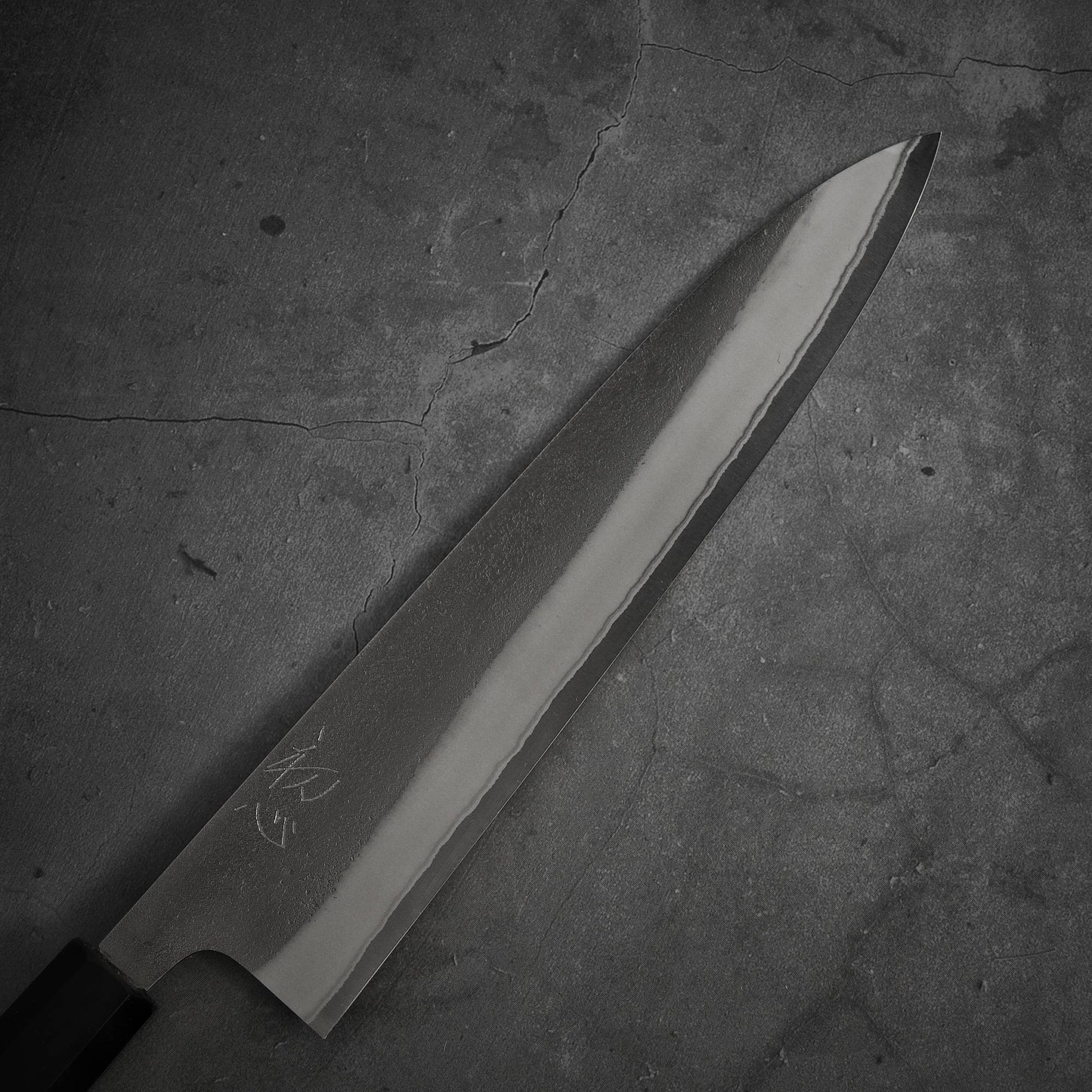
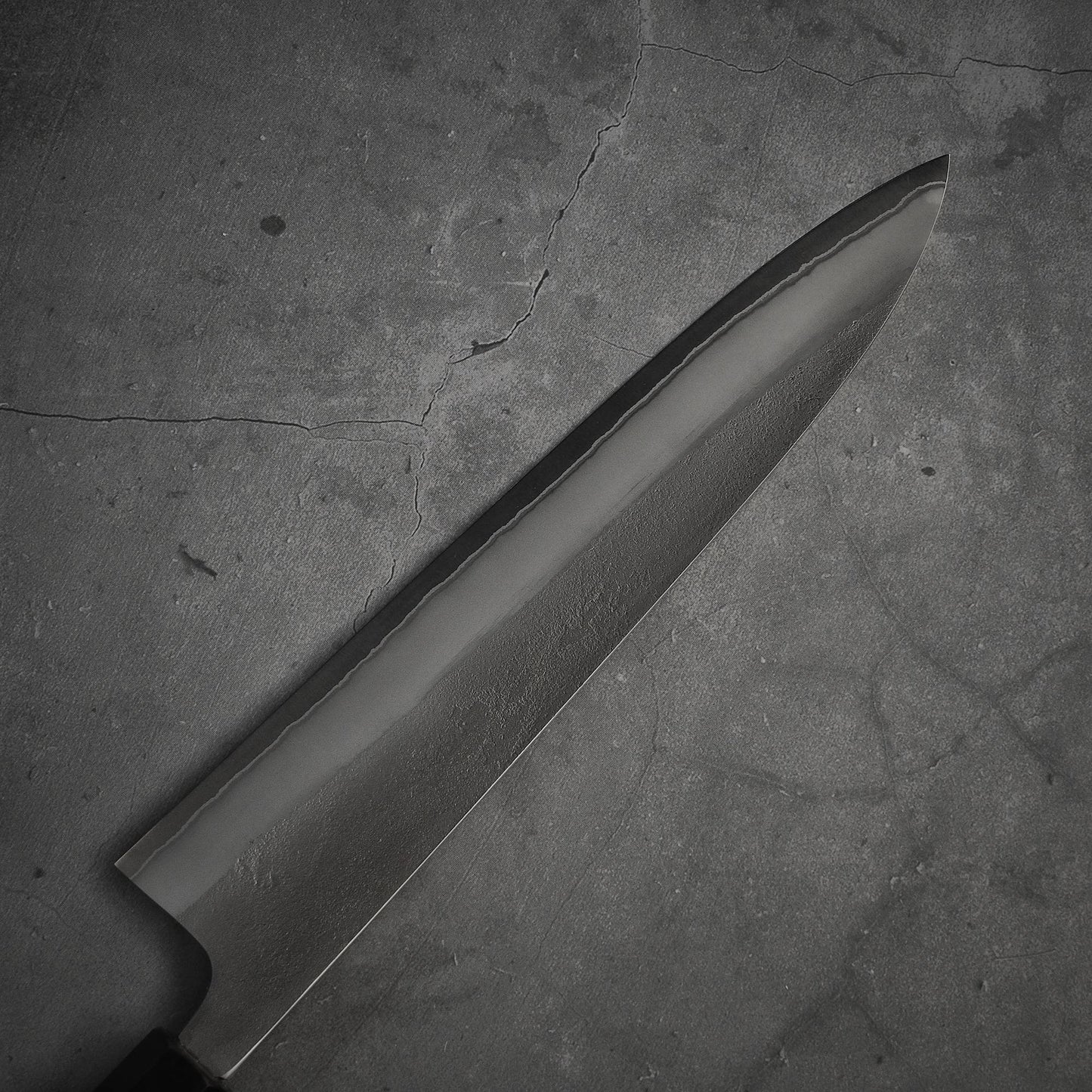
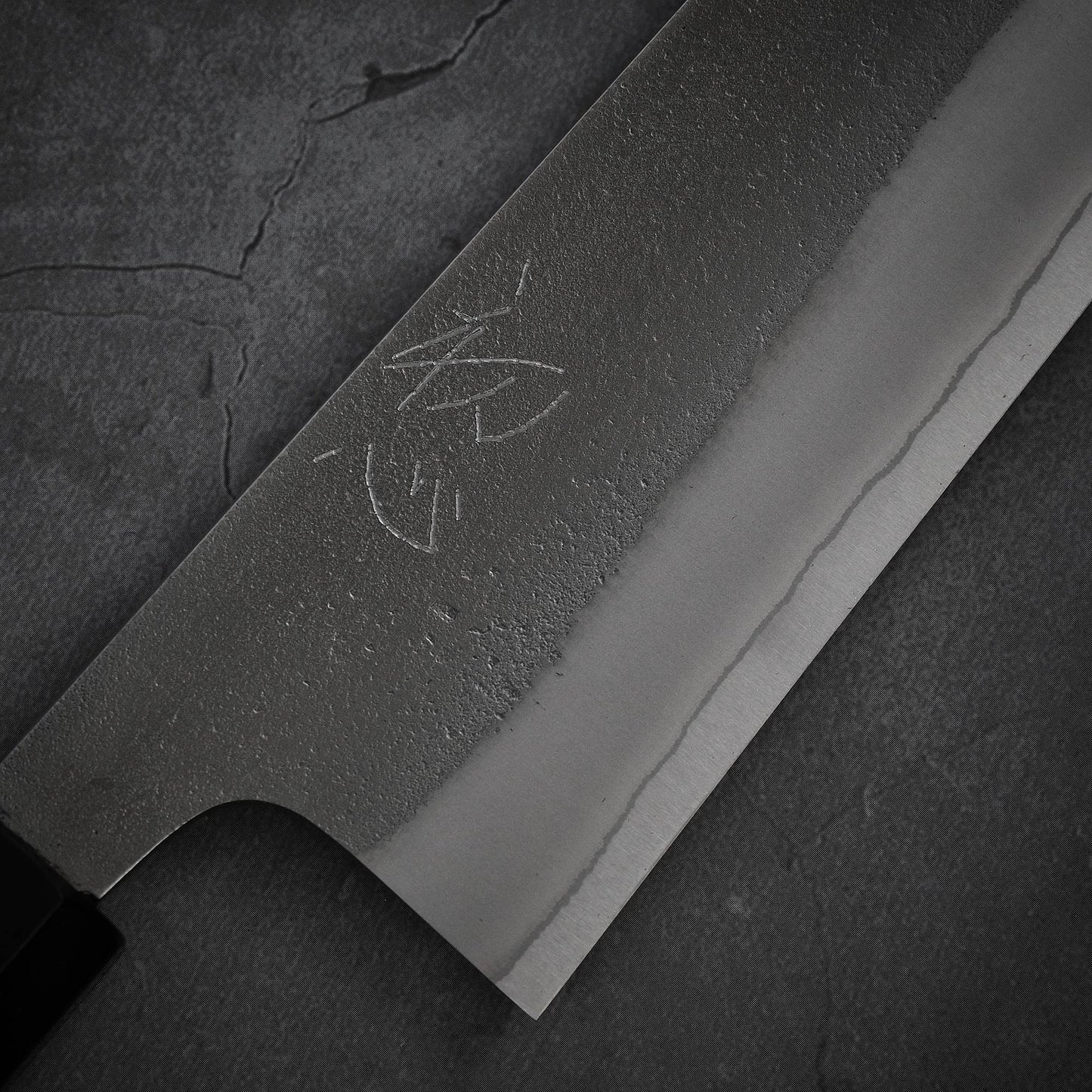
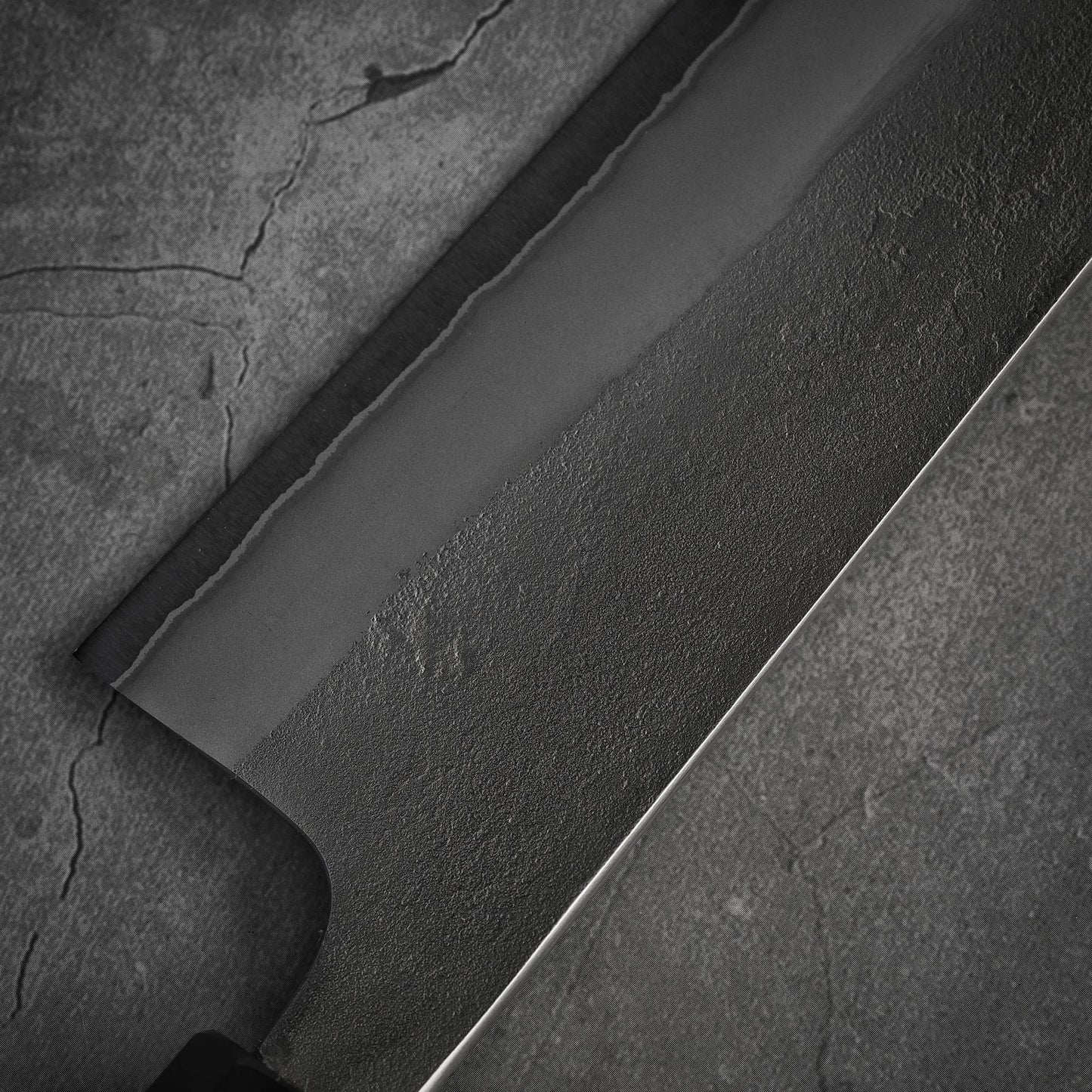
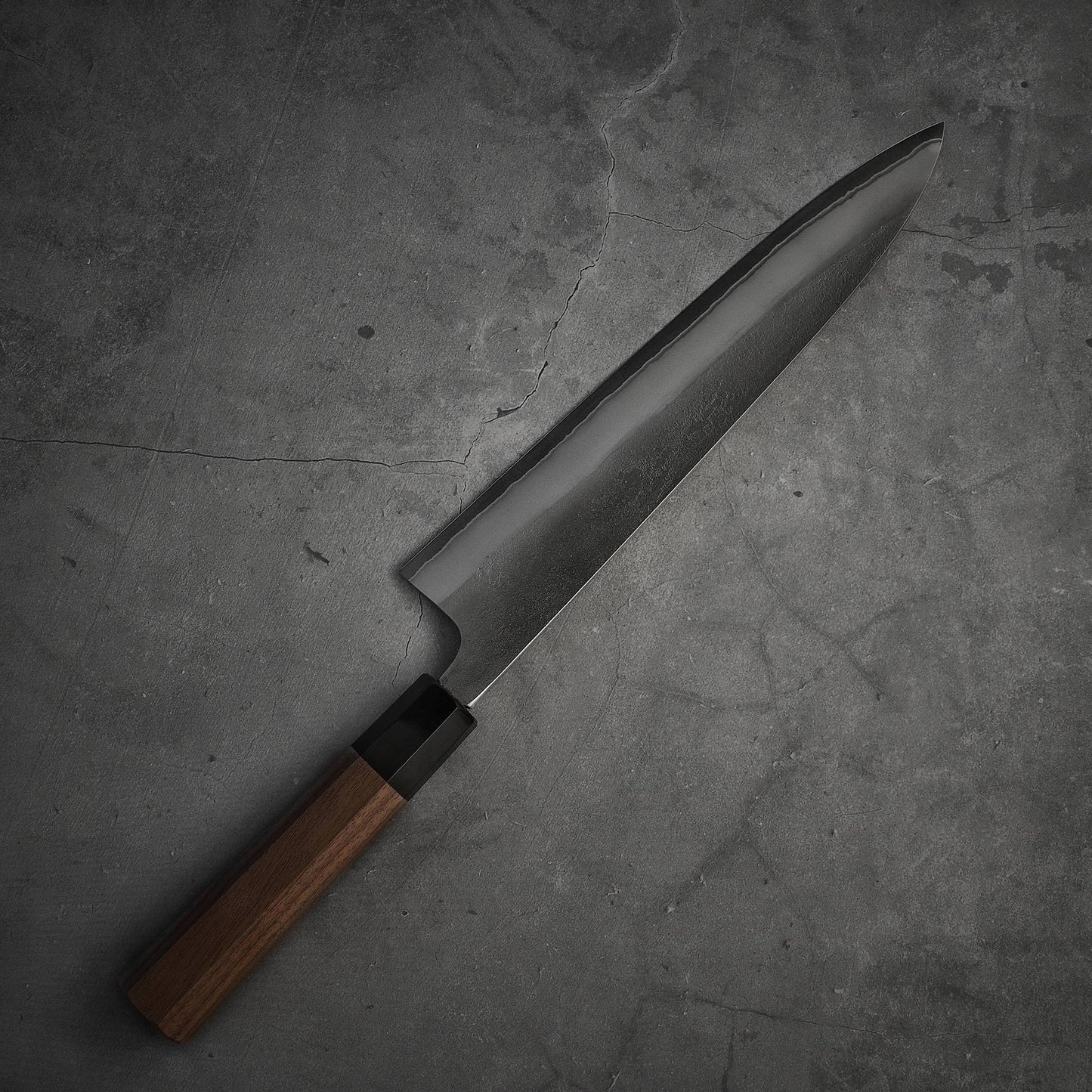
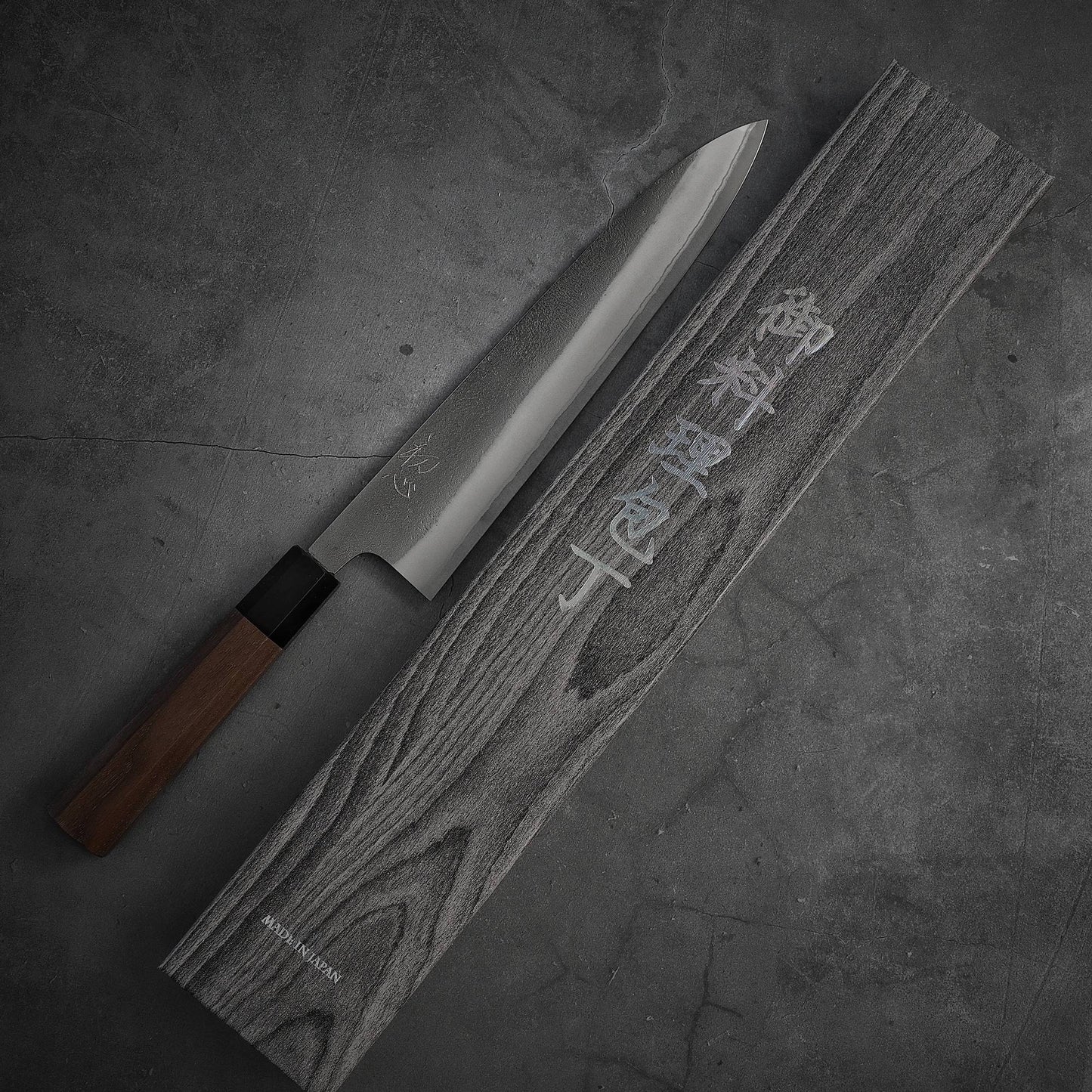
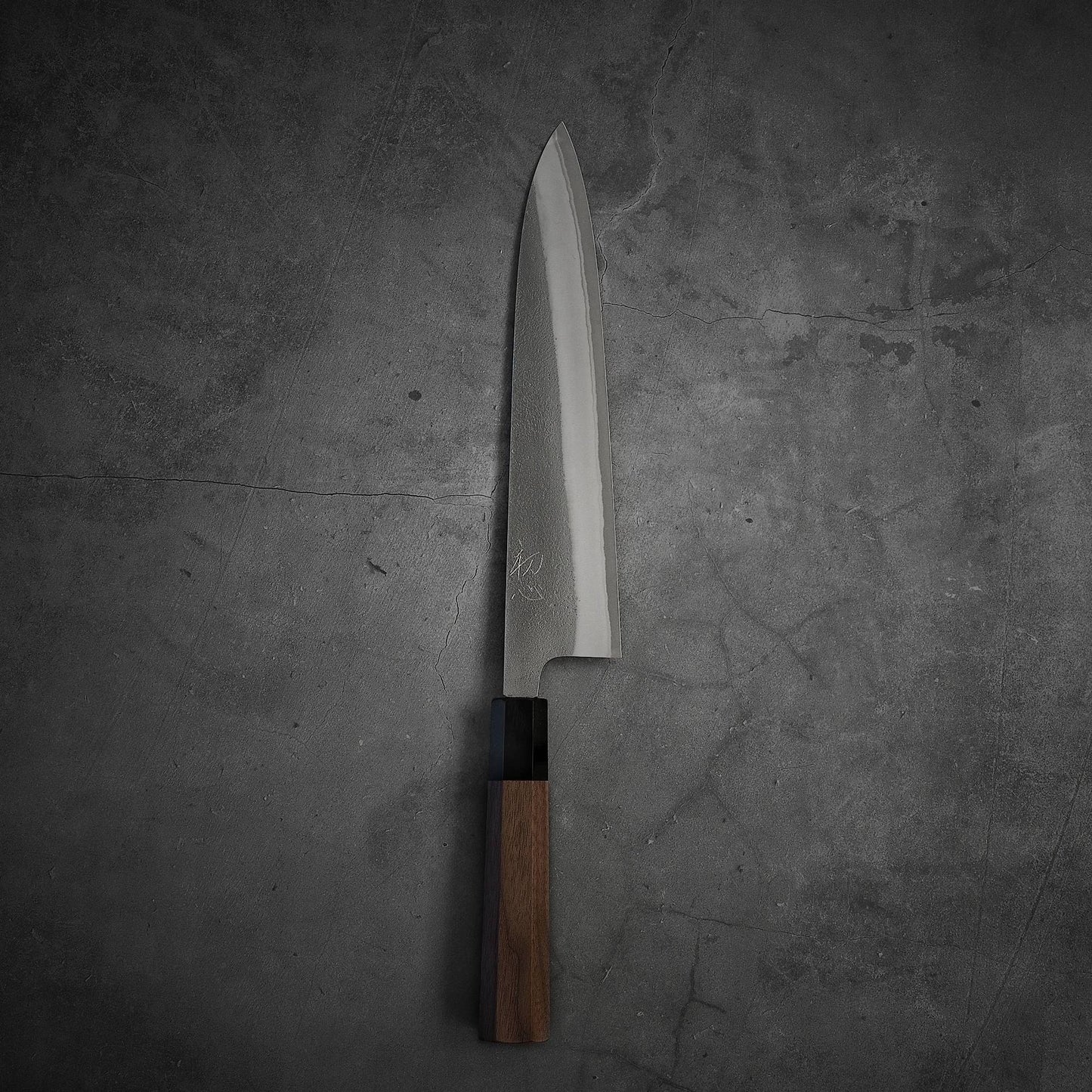
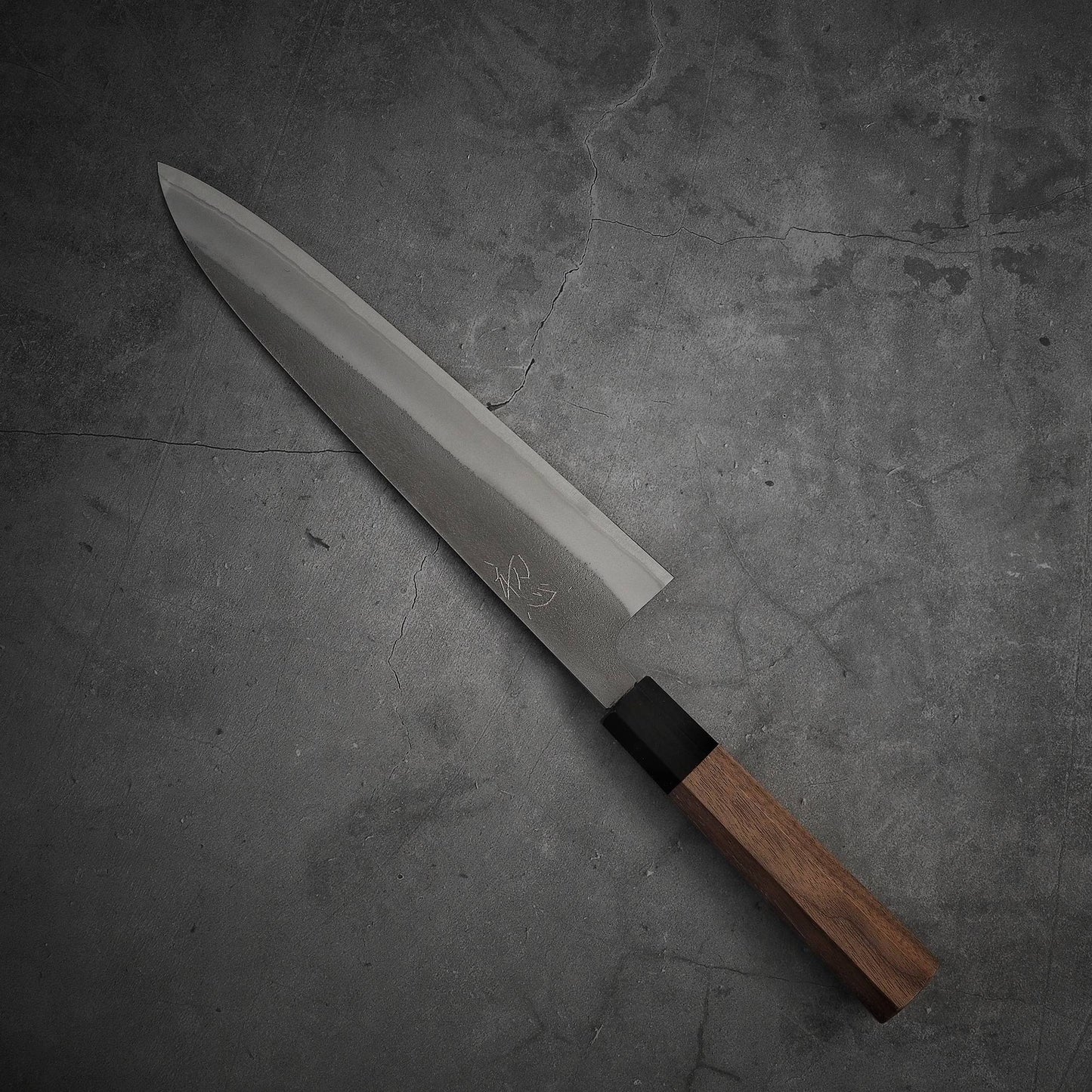
This gyuto knife from Hatsukokoro is handcrafted by Yoshikane Hamono in Sanjo, Japan. The blade is forged from Shirogami #2 steel, known for its ability to achieve a razor-sharp edge and ease of sharpening, making it a preferred carbon steel among chefs and enthusiasts. The nashiji finish lends it a traditional aesthetic. The gyuto knife's design is well-suited for a variety of kitchen tasks, including slicing, dicing, and chopping, making it a reliable choice for everyday culinary needs.
About Yoshikane Hamono
Yoshikane Hamono, a renowned Japanese knife-making company in Sanjo City, Niigata, was founded in 1919. With over a century of history, it is now led by fourth-generation master craftsman Kazuomi Yamamoto. This family-operated business has consistently maintained its traditional hand-forging and grinding techniques.
Details
Brand: Hatsukokoro
Blacksmith: Yoshikane Hamono | Kazuomi Yamamoto
Location: Sanjo, Japan
Knife Type: gyuto
Finish: nashiji
Cladding: stainless clad
Core Steel: Shirogami #2 / White #2
Steel Type: carbon steel
HRC: 62-63
Blade & Handle Specs
Overall Length: 401mm
Blade Length (heel to tip): 243mm
Blade Height at Heel: 50.1mm
Spine Thickness:
At Handle: 4.7mm
At Heel: 3.6mm
Middle: 2.1mm
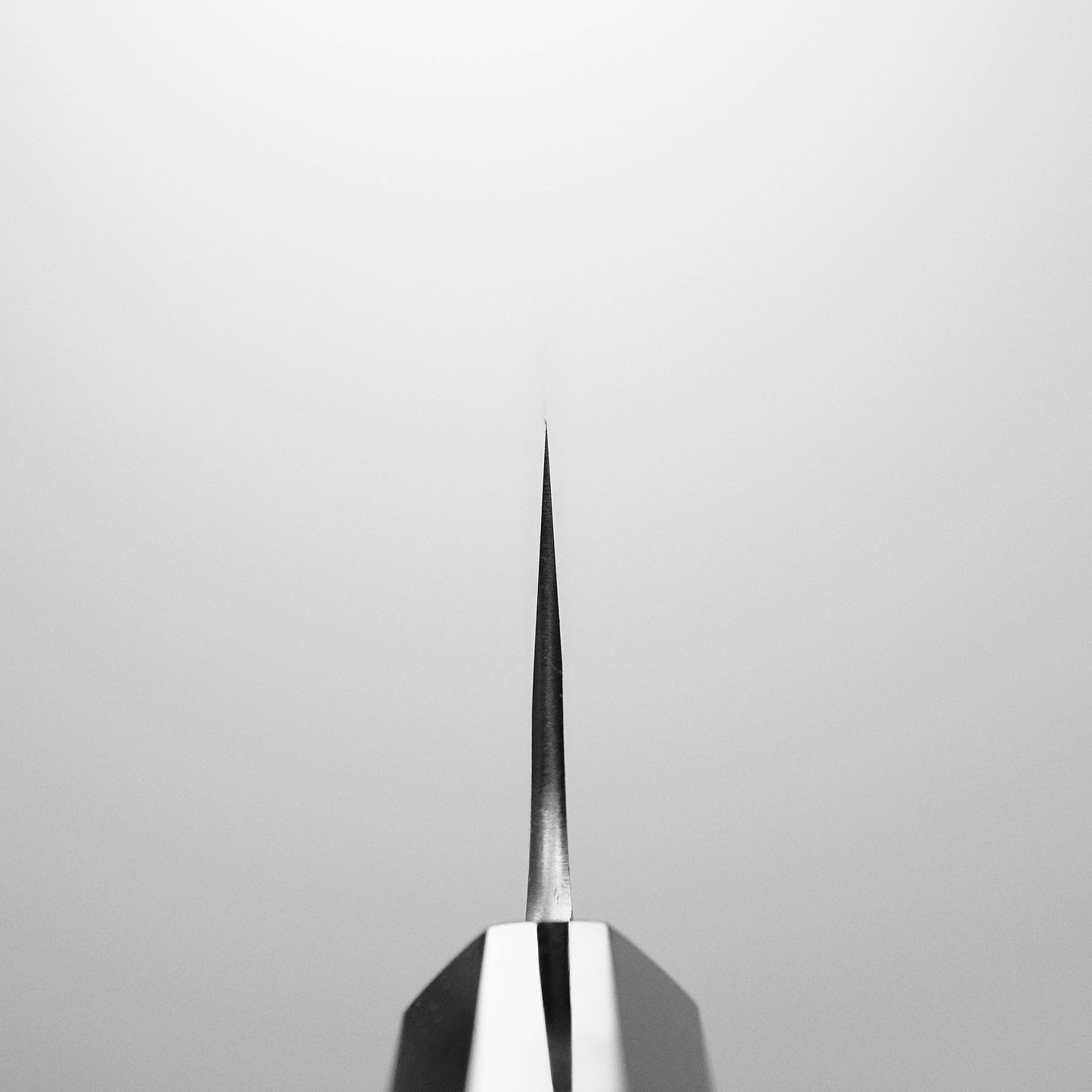
1cm from the Tip: 1.1mm
Weight: 192g
Edge/Bevel: 50:50
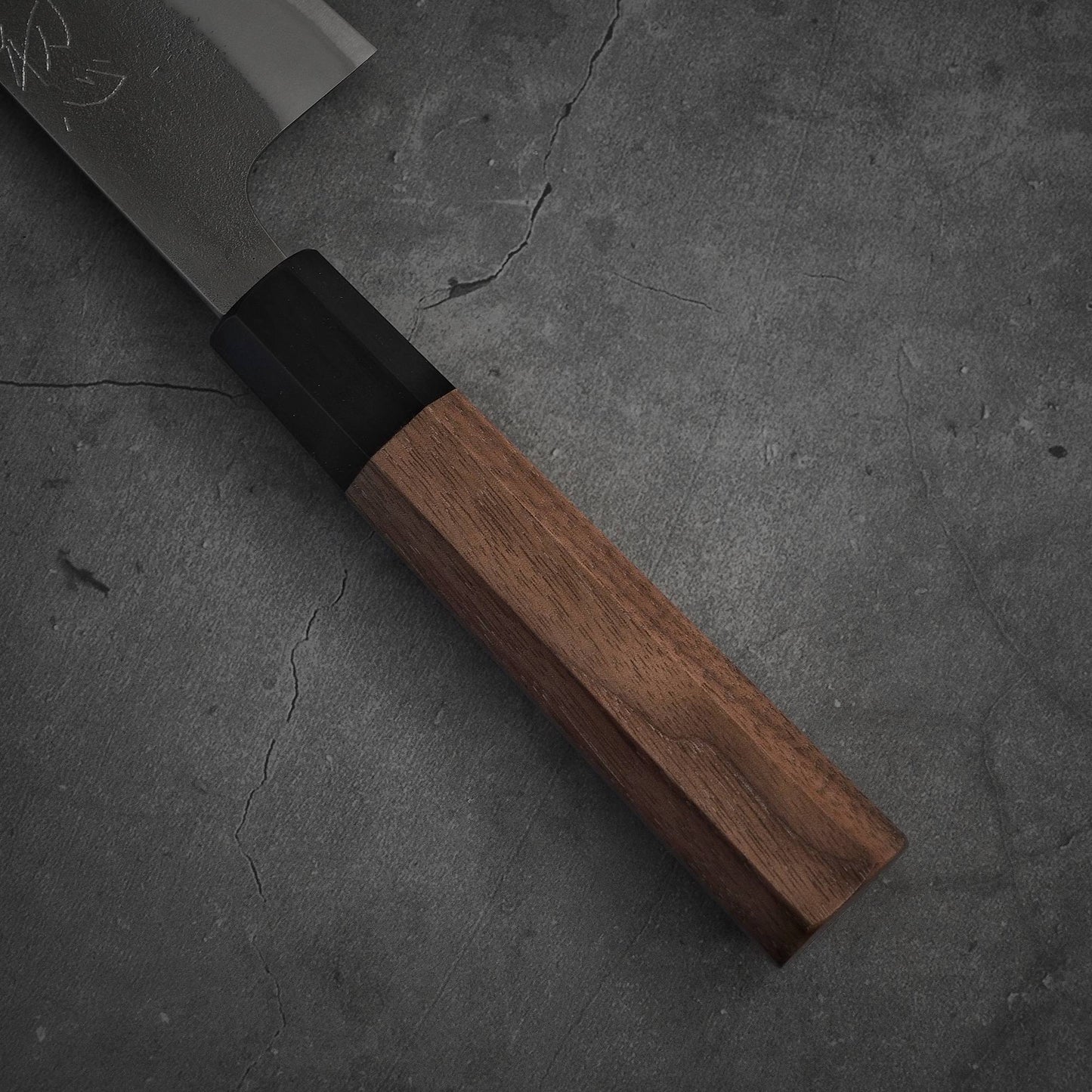
Handle: octagonal walnut with horn ferrule
Hand Orientation: ambidextrous
Saya/Sheath: Not included
Note:
For the care and maintenance of Japanese knives, such as the Yoshikane Nashiji Shirogami #2 Gyuto knife, please refer to our care guide.
Slight measurement variations are typical in handcrafted Japanese kitchen knives.
Similarly, minor cosmetic variations—such as light surface marks or fine scuffs—are common in these artisanal knives.