

Quick Navigation:
Can't decide between carbon steel and stainless steel for your Japanese knife? You're not alone. The choice between these two steel types is one of the most common questions from knife buyers. If you're completely new to Japanese knives, check our beginner's guide to choosing your first Japanese knife.
Here's the truth: there's no objectively better steel. It all depends on your preferences and how you use your knife. Some people love carbon steel for its easier sharpening and character. Others prefer the convenience of stainless steel. Both are excellent choices.
Understanding the Basics
You'll often see claims like "carbon steel holds an edge better" or "stainless steel is tougher." That's misleading. There are dozens of different carbon steels and dozens of different stainless steels, and you can't make blanket statements about either category. Both types include steels that are tougher and more durable (like SK for carbon or AUS-8 for stainless) and harder steels that hold their edge longer (like Aogami Super for carbon or ZDP-189 for stainless). Those generalizations are misleading and don't really help you with your decision.
So what actually defines carbon versus stainless steel? It comes down to one element: chromium.
The table below compares popular knife steels and their chromium content:
Steel Composition Comparison
| Steel Type | Steel Name | Chromium (Cr) | Rust Resistance | Carbon (C) | Other Alloying Elements |
|---|---|---|---|---|---|
| Carbon Steel | Shirogami #2 (White #2) | 0% | Will rust | 1.05-1.15% | Manganese, Silicon, Phosphorus, Sulfur |
| Carbon Steel | Aogami Super (Blue Super) | 0.30-0.50% | Will rust | 1.40-1.50% | Tungsten, Vanadium, Manganese, Silicon, Phosphorus, Sulfur |
| Semi-Stainless | HAP40 | 3.70-4.70% | Will rust (slower) | 1.27-1.37% | Molybdenum, Tungsten, Vanadium, Cobalt |
| Semi-Stainless | SKD | 4.50-5.50% | Will rust (slower) | 0.95-1.05% | Molybdenum, Vanadium, Nickel, Manganese, Silicon, Copper, Phosphorus, Sulfur |
| Stainless Steel | Ginsan (Silver-3) | 13.00-14.50% | Resists rust | 0.95-1.10% | Manganese, Silicon, Phosphorus, Sulfur |
| Stainless Steel | SG2 (R2) | 14.00-16.00% | Resists rust | 1.25-1.45% | Molybdenum, Vanadium, Manganese, Silicon, Phosphorus, Sulfur |
Steel composition data from zknives.com
The key difference: knife steels with at least 13% chromium are stainless steel and resist rust. Knife steels below this threshold will rust and are classified as either carbon steel or semi-stainless steel.
You'll also notice in the table that all knife steels contain the element, carbon. Why? Carbon is the main hardening element that makes steel suitable for knives.
So why is one type called "carbon steel" if they all contain the element, carbon? It's a naming convention. When we say "carbon steel", it simply means knife steel without corrosion resistance (zero to low chromium), while "stainless steel" means knife steel with corrosion resistance (13%+ chromium).
Carbon content also varies between knife types. Western knife steels typically have around 0.5% carbon content. Japanese kitchen knives contain much more - typically 1.0% to 1.5% carbon. This higher carbon content is why Japanese knives have better edge retention and stay sharp longer. For a detailed comparison of Japanese and Western knives, see our Japanese vs Western knives guide.
You might see knives marketed as "high carbon" steel. Ignore this term - it's vague marketing language that doesn't help you choose. Technically, "high carbon" means steel with over 0.5% carbon, but Japanese knives contain 1.0-1.5% and many Western knives also exceed 0.5%, so the label tells you nothing useful. Focus on what actually matters: is it stainless (resists rust) or carbon steel (will rust)?

Maintenance and Care
This is the main deciding factor for most people: how much maintenance are you comfortable with?
Carbon Steel Care
Carbon steel requires more attention than stainless. Wash and dry your knife immediately after use. Never leave it wet on the cutting board or it will develop rust spots.
Back in my early 20s when I was considering my first carbon steel knife as a newbie, I had this fear that it would rust immediately - like literally right after cutting something. I thought I'd finish chopping onions, turn around for a second, and come back to a rusty blade. That's how much I overestimated how fast rust forms.
The reality? It's nowhere near that dramatic. Many customers tell me they're worried carbon steel will rust too easily. Rust doesn't appear instantly - you have time to finish what you're doing and clean your knife. If you follow basic care - wash, dry, store in a dry place - rust is easily prevented. It becomes second nature after a few uses.
Stainless Steel Care
Stainless steel is more forgiving. Wash and dry after use - that's it. You don't need to worry about rust if you leave it on the counter for a few minutes. No patina develops. It stays looking clean and bright.
That said, get into the habit of washing and drying your knife when you're done using it. You invested in this knife, so take care of it. Don't leave it sitting in the sink. This habit also makes the transition to carbon steel easier if you decide to try it later.
Keep in mind that "stainless" doesn't mean stain-proof. If severely neglected - left wet for days or sitting in a dirty sink - stainless steel can still develop rust spots. But with basic care, this won't happen.
This makes stainless steel ideal for busy kitchens or anyone who wants a grab-and-go knife without extra maintenance steps.
Rust and Patina
Carbon steel knives develop patina - a natural darkening that forms when the steel reacts with moisture and acids in food. This patina is protective, not harmful. It's one of the reasons most enthusiasts love carbon steel. For more details on patina, see our complete patina guide.
The initial colorful patina starts forming when you cut acidic ingredients like onions or tomatoes. You'll see blues and oranges at first, which mature to charcoal grey over 2-4 weeks of regular use. Non-acidic ingredients like carrots cause little to no reaction. Once stable, the patina acts as a barrier against rust.

How do you tell rust from patina? Simple test: wipe the discolored area with a tissue. If color transfers to the tissue, it's rust and should be removed. If nothing transfers, it's patina.
Stainless steel doesn't develop patina because the chromium content (at least 13%) prevents oxidation. The blade stays bright and clean-looking indefinitely.
For general knife care and maintenance, check our Japanese knife care guide.
Sharpness and Sharpening
Carbon steel can get slightly sharper than stainless steel. The simpler steel composition allows for a more aggressive and keener edge. This makes carbon steel excellent for precision cutting work. It's why many professional chefs, especially sushi chefs, prefer carbon steel.
But here's the thing: sharpness depends more on your sharpening skill than the steel type. A well-sharpened stainless steel knife is sharper than a poorly sharpened carbon steel knife. If you're proficient at sharpening, you can make any knife razor-sharp.

In my experience with entry-level carbon and stainless steel knives (which I still use today), carbon steel does achieve a slightly sharper edge, but both get sharp enough that you won't notice in practical cooking. A basic SK carbon steel knife and a basic AUS-8 stainless steel knife both perform excellently for home cooking. The difference becomes more significant at the high end - steels like Aogami #1 versus ZDP-189 behave quite differently on the stones.
If you're buying your first Japanese knife and can't decide between carbon or stainless based on sharpness and performance, don't overthink it. Choose based on maintenance requirements instead. Both will get sharp enough for everything you need to do in the kitchen.
Price Range
Both carbon steel and stainless steel knives range from affordable to expensive. The price depends more on the maker and craftsmanship than the steel type alone.
For your first Japanese knife, expect to start around $100. At this price point, both carbon and stainless options offer excellent performance - far better edge retention than typical Western knives. A $100 Japanese knife is good enough even in professional kitchens.
From there, prices scale up based on steel type, maker reputation, and craftsmanship. If you have the budget, the sweet spot for a high-performance knife is around $300-400 - this gets you exceptional performance and craftsmanship that will last a lifetime without needing an upgrade. That said, there are excellent performers under $200 like the Takamura SG2 gyuto or Kyohei Shindo Aogami gyuto that punch well above their price.
Don't get stuck overthinking specs like HRC or exact steel composition. Choose based on your maintenance preference (carbon vs stainless) and what fits your budget. All Japanese knives at these price points perform exceptionally well.
Carbon steel options range from budget-friendly SK and ZCD-U steels to premium Aogami Super and Shirogami steels. Even within the same steel type, prices vary widely based on the blacksmith and craftsmanship.
Stainless steel is similar. Entry-level stainless includes AUS-8 and VG10. High-end stainless includes SG2 and ZDP-189. Again, even within these categories, prices vary based on the maker.
The takeaway: don't assume carbon steel is always cheaper or stainless steel is always more expensive and vice versa. Both have wide price ranges depending on the maker, the craftsmanship, and rarity. Some knives are collector pieces and naturally command premium prices, like the Kiyoshi Kato gyuto below.

Frequently Asked Questions
Is carbon steel sharper than stainless steel?
Yes, carbon steel can achieve a slightly sharper edge than stainless steel due to its simpler composition. However, sharpening skill matters more than steel type - a well-sharpened stainless knife beats a poorly sharpened carbon knife. With proper technique, both can be made extremely sharp.
Which is easier to maintain?
Stainless steel is easier to maintain. Just wash and dry like any other knife - no special care needed. Carbon steel requires washing and drying immediately after each use to prevent rust, though this becomes second nature quickly.
Why does my carbon steel knife rust even after washing and drying?
Two common causes: First, high humidity makes carbon steel maintenance difficult even with proper care. If you live in a very humid area, stainless steel is more practical. Second, if you're using a saya (knife sheath), trapped moisture inside can cause rust. Make sure both knife and saya are completely dry before storing.
Do I need to oil carbon steel knives?
Not for daily use. If you wash and dry your carbon steel knife immediately after use, oiling isn't necessary. When I was a sushi chef, we never oiled our knives. Oiling is only needed for long-term storage or transport, not daily cooking.
Which is better for beginners?
Stainless steel is more forgiving because it won't rust if you forget to dry it right away. However, carbon steel is perfectly fine for beginners too - the maintenance is straightforward, just wash and dry immediately after use.
Will carbon steel react with acidic foods?
Initially yes, but temporarily. A brand new carbon steel knife may cause minor food discoloration or metallic taste with acidic ingredients like onions or tomatoes. This disappears after 2-3 uses as patina develops. Once stable patina forms, there's no reactivity at all.
Which Should You Choose?
Choose carbon steel if you enjoy sharpening, appreciate the character that patina brings, and don't mind washing and drying your knife after use. Carbon steel is for people who view their knife as a tool that gains personality over time.
I've had many customers who were initially intimidated by carbon steel but decided to try it anyway. Most of them report that after the first week, the maintenance becomes automatic. One customer told me he worried about rust for months before buying, but after actually using the knife, he realized it was "way easier than expected - I just wipe it dry and I'm done."
Choose stainless steel if you want convenience and worry-free maintenance. Stainless is ideal for busy kitchens, fast-paced environments, or anyone who doesn't want to think about rust. It's also better if you frequently cut acidic ingredients and don't want to deal with food discoloration during the first few uses.
There's also a middle option: stainless clad carbon steel. These knives have a carbon steel core sandwiched between stainless steel cladding for easy maintenance. You get the cutting performance of carbon with easier maintenance.
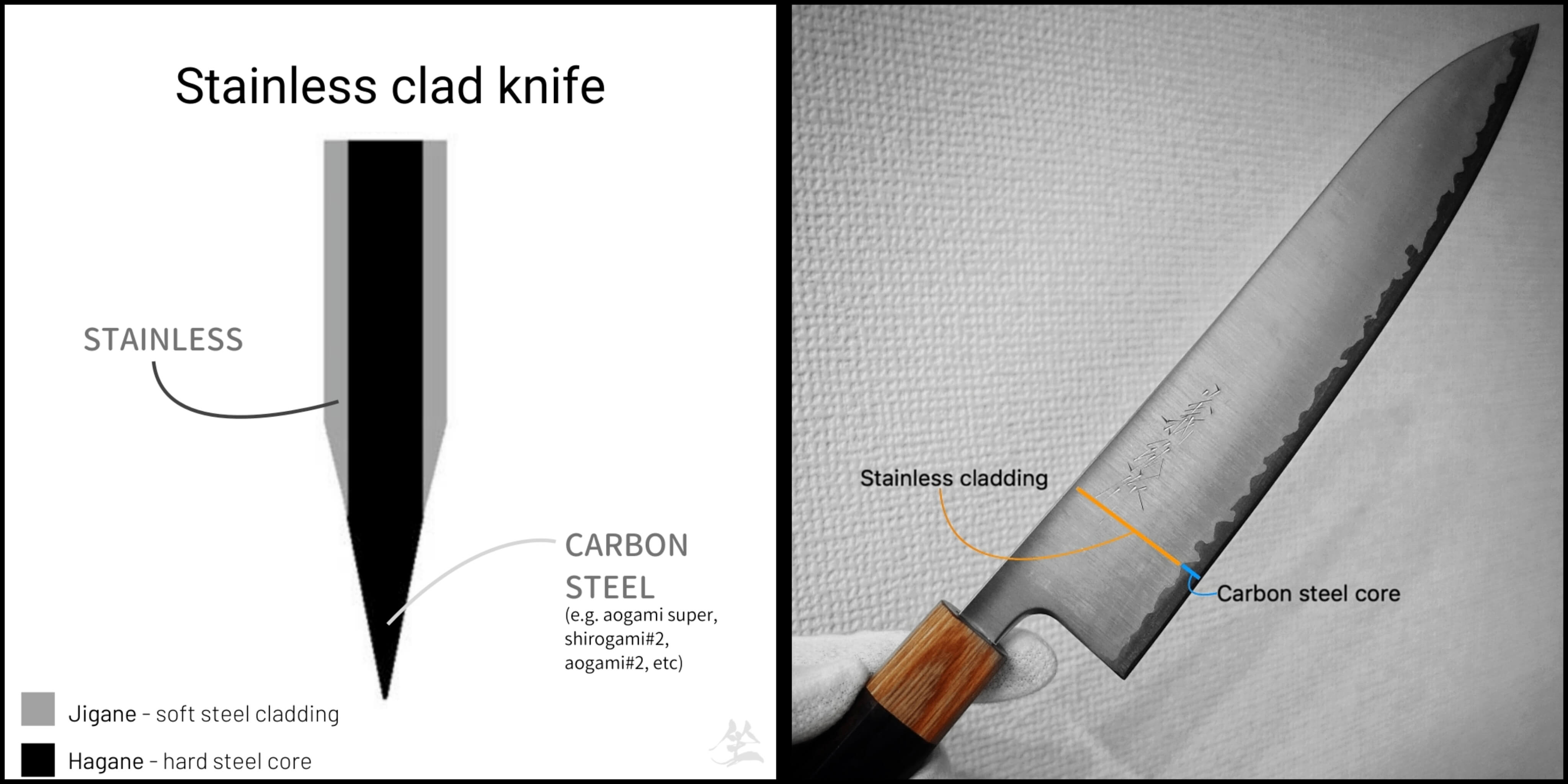
Remember, there's no perfect steel. Knife steel is always a tradeoff between hardness, toughness, corrosion resistance, and ease of sharpening.
The most important thing: don't overcomplicate this decision. Are you okay with washing and drying immediately after use? Do you appreciate patina? If yes, go carbon steel. If no, go stainless steel. That's it.
Final Thoughts
There's no objectively better steel type. Carbon steel and stainless steel are both excellent - they just serve different preferences.
Your decision comes down to one simple question: are you comfortable with extra maintenance? If you don't mind washing and drying your knife immediately after use, carbon steel is a great choice - it's slightly easier to sharpen and develops character over time. If you want convenience and don't want to think about rust, stainless steel is the way to go.
That said, most enthusiasts eventually own both types. There's a strong preference for carbon steel among experienced users - knife enthusiast communities and custom knife makers tend to focus primarily on carbon steel rather than stainless options. Stainless is there for convenience, but carbon steel tends to be what people reach for once they're comfortable with the maintenance.
Don't overthink this. Pick based on your maintenance preferences. Both will serve you well.
Ready to explore Japanese knives? Browse our carbon steel collection, stainless steel collection, or learn more in our Japanese knife guides.
About the author: Fred M. trained at Tokyo Sushi Academy and worked as a sushi chef before starting Zahocho Knives in 2019. Based in Japan, he sources knives from renowned knife-making regions like Sakai and Sanjo, working with blacksmiths like Yoshikazu Tanaka, Satoshi Nakagawa, and Kisuke Manaka.